
Sipovo on the water
This is not my first time in Sipovo, but I have to admit that, unlike the last visit, the place feels much more touristy than before. At every turn there are apartments, bungalows, cottages, eco zones — of this kind and that, to be fair — but it is quite clear that a good part of the locals has started to take on the role of host. That is good for this place, because the situation with the attitude toward nature is critical, and I hope that a strong interest from locals and a significant flow of visitors will protect it — in the sense of seeing nature as a tourism resource from which the whole community can benefit, not only a few individuals.
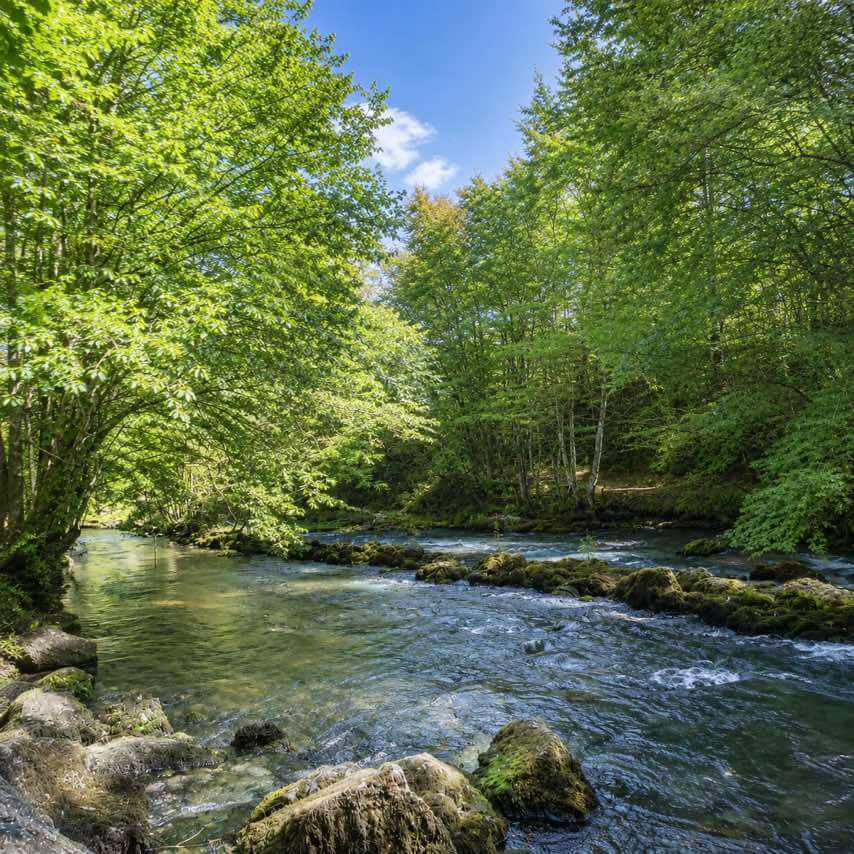
Sipovo has, if one can put it this way, breathed out after corona. It has been discovered. We all discovered it a little, promoted it, saw something unique, important and potent to sell. Walking around, I feel a little important, because I know how many times and in how many places and occasions, recognising the potential, I promoted this place. There is still a great deal to do and to put in order. Some of the things I saw are not dear to me, but this text is not about that.
Crowds on the islets
At the Janj islets a crowd was waiting for me. Parking is paid, but so many cars parked in every possible way is itself enough to create unease. There is a bus as well, just arrived. As usual, I check in with Dragana first. I wanted to yesterday too, but that was impossible because of the crowds. The Janj islets at Dragana’s… colourful, sweet and packed like a pomegranate.
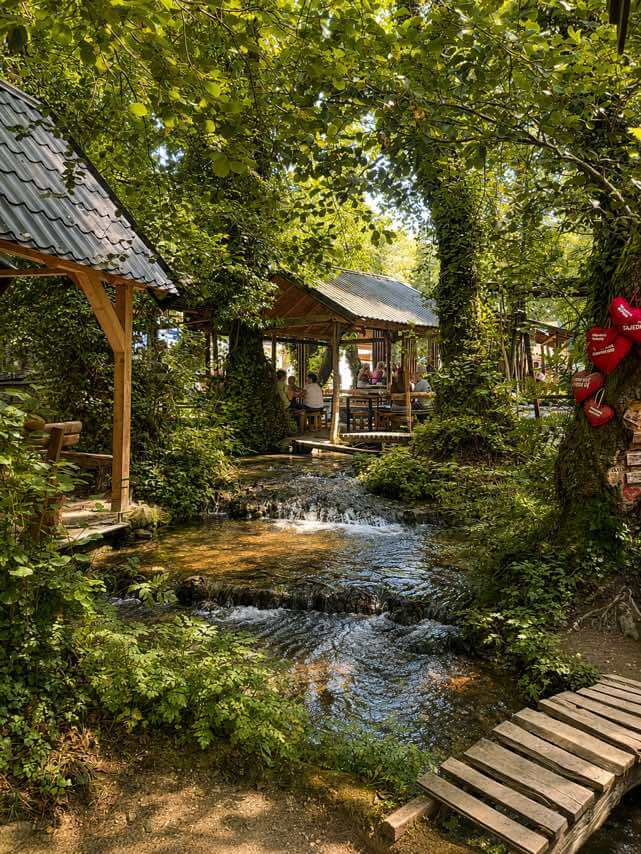
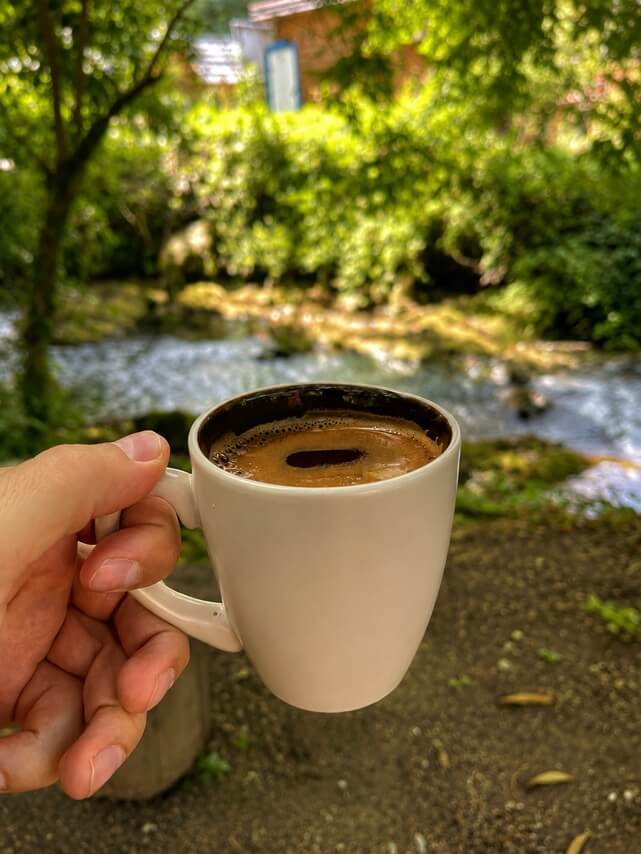
Konoba kod Dragane
Unlike some previous visits, it is noticeable that other locals have organised too, so you have a few more options nearby to sit down. It is not at some high level, let’s be clear, but decent in a village way. In the end you come for something like that. Fine, the bench for sitting could be repaired, because you are charging for sitting on it. But those are details.
Waterfalls and “compensation”
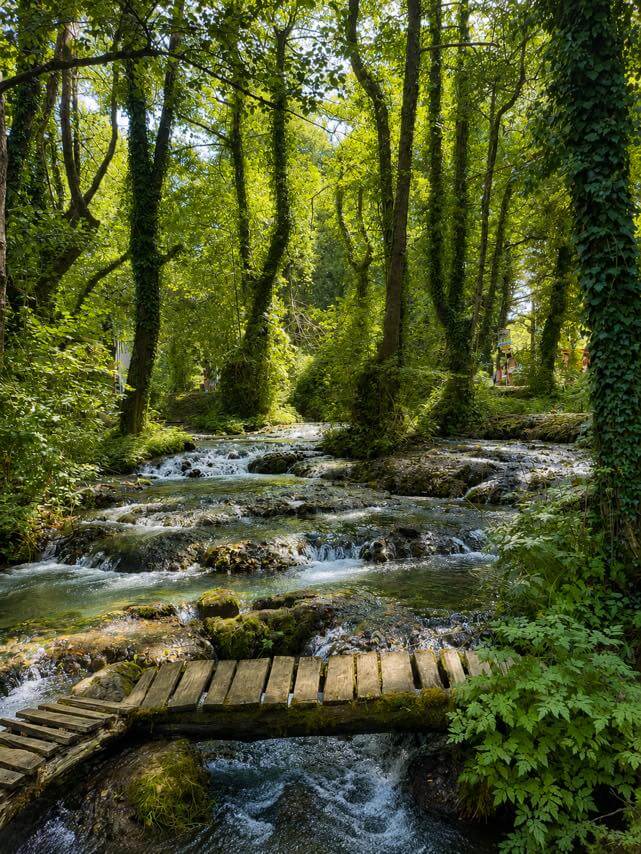
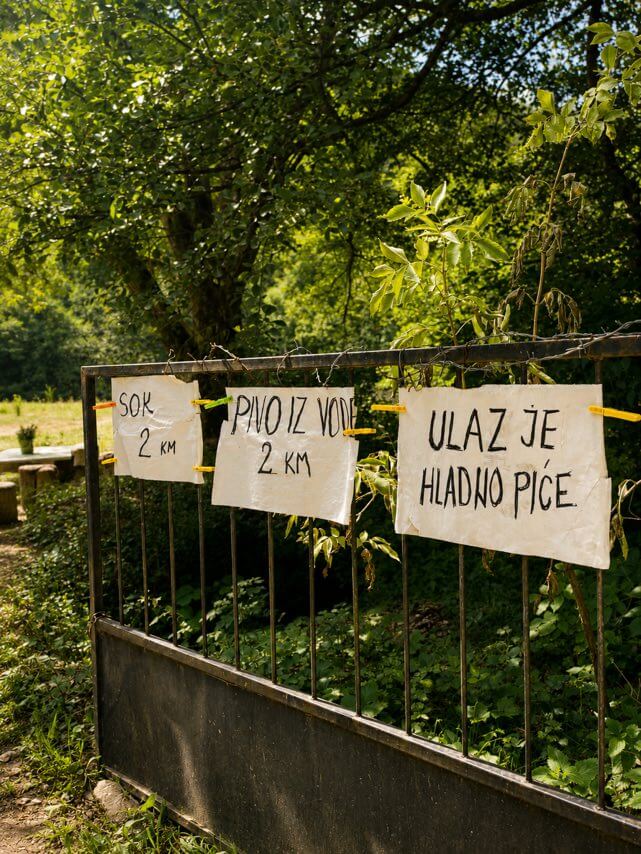
Earlier you could not really reach the waterfalls; now you can, along a nice gravel road. Again it is through private land, and passage is free, although a kind woman at the entrance, and a sign as well, suggest you buy something as compensation. The beer is cold. Prices are symbolic, but you know how the saying goes: grain by grain. My older boy even got a candy.
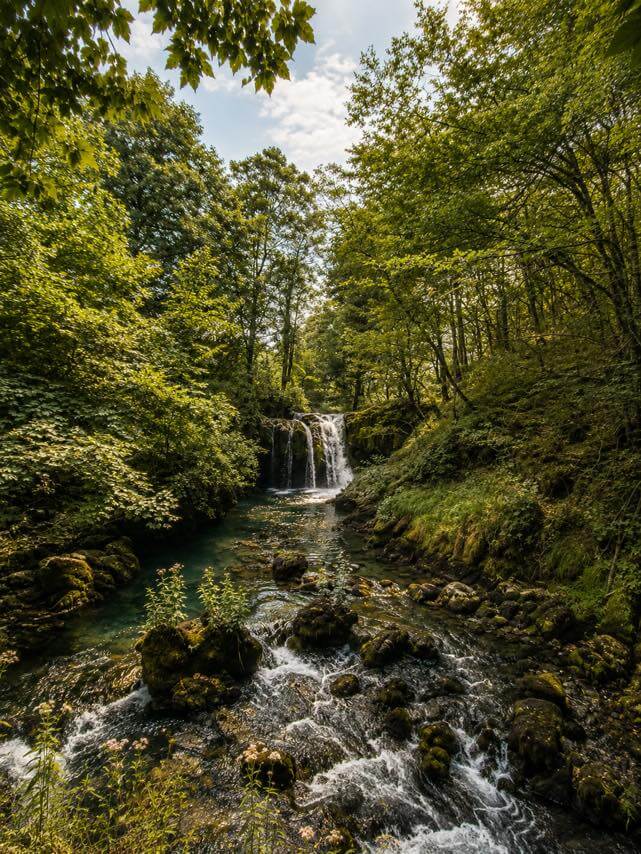
The waterfalls are beautiful. One approach is easy; the other demands great caution because of the height and the terrain. And there too you can see locals selling, mostly refreshments at symbolic prices. Nearby there are houses that rent accommodation. The impression is that everyone is renting accommodation. Demand does its work. I conclude that many people walk, circulate, leave and arrive. Sunday, it seems, is a special day for a weekend visit to the Janj islets. I see that also by comparing it with the trip to the source of the Pliva, where we were the only ones.
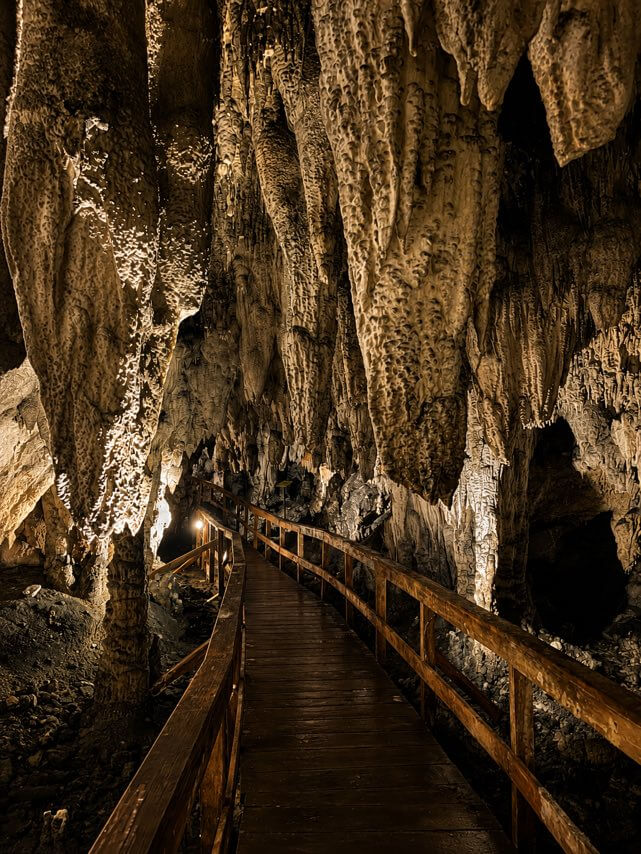
There were no crowds on the visit to Vagan Cave either, but there was circulation there too. They have done it up nicely. The approach is paved. The explored part of the cave that is allowed for visits and tours is not long, so you can finish relatively quickly. Vagan Cave is worth visiting. Perhaps some basic equipment should be provided, say protective helmets.
The cow as an attraction
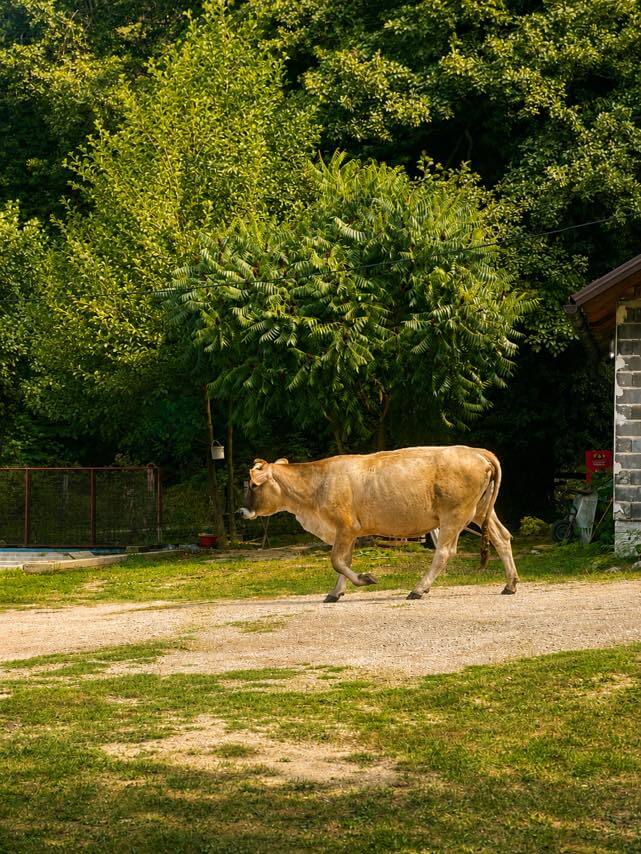
Back to the islets. Cows are all around us. From their milk comes one of the most beautiful cheeses we have — Janjska pletenica. It is interesting how many people photograph them. The impression is that they are an attraction. Carried by that, I photograph them too. And I often talk about this in the media and in workshops: original, simple, everyday situations, under the pressure of great changes in the way of life and its speed, are changing. We have become estranged from what we were. The cow is an attraction.
Raj na vodi
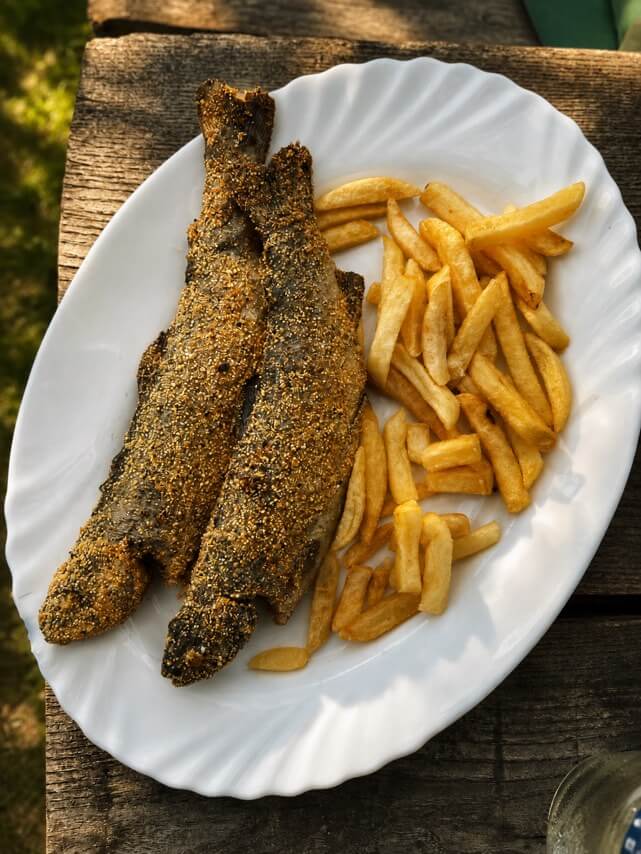
A few hundred metres from the main parking there is a nicely and tastefully arranged cafe/restaurant, “Raj na vodi”. You can also approach by car. Lord, it is terribly Instagrammable. There are plenty of details that wake your interest. Every guest holds a phone, turns their head and just clicks. I am here for the first time. The trout was tasty.
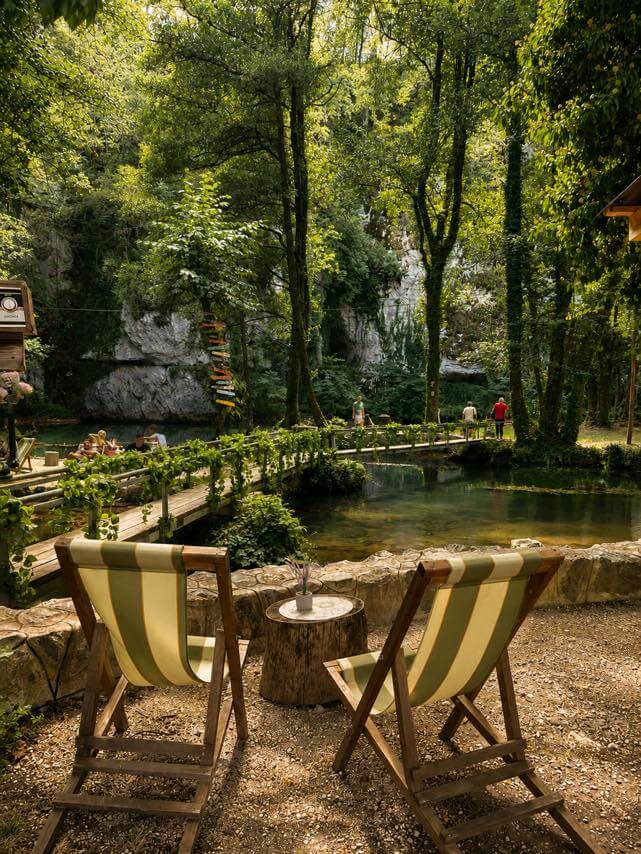
I keep thinking how almost the entire Janj islets are photogenic. A formidable extra motive for coming, in today’s world “on a click”.
Time will tell whether Sipovo, with its springs, rivers, caves, old-growth forests and the Janj islets, will manage to make a quality, sustainable story. Whether it will make a recognisable and unobtrusive setting, grounded in natural phenomena and an authentic experience — because it definitely has all the preconditions for that — or whether over time it will go to the completely opposite extreme. The chances, at this moment, are even.
Similar posts
Baku - more European than you think
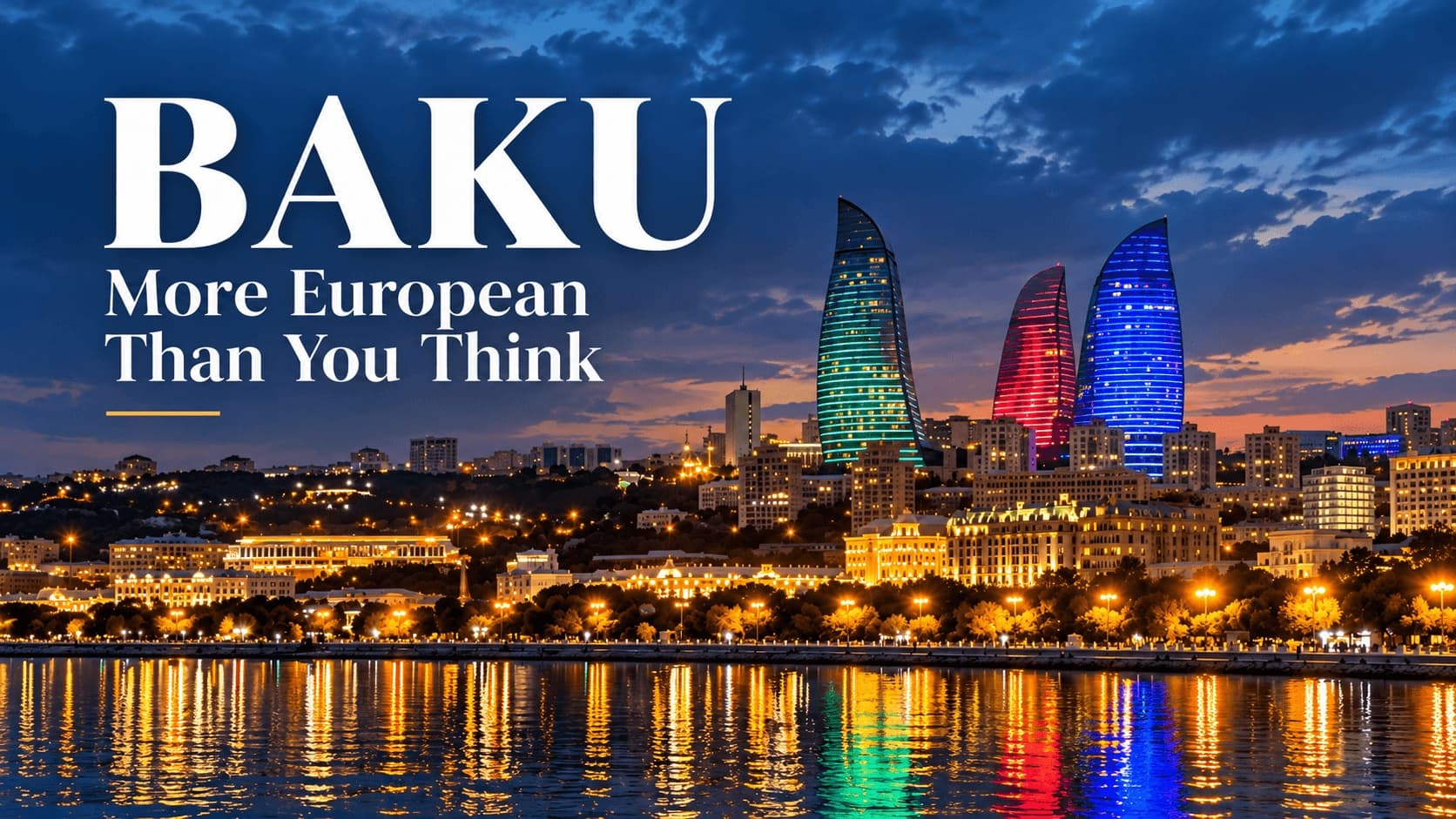
Baku is a clean, green and calm city, and that is the first thing you notice. I went to Azerbaijan for the Uzakrota summit, and I got to know the city on foot: 50,000 steps from the Caspian shore and the centre to the walls of the Old City. The dandelion fountain The seaside boulevard (Baku Boulevard) is a huge park right along the shore, full of children’s playgrounds, cafes and shade. In 2024 it received the Large Urban Park Award, the international recognition given by World Urban Parks to large city parks. Right next to it is the Old City, Icherisheher, with the Maiden Tower and the Palace of the Shirvanshahs, on the UNESCO World Heritage List since 2000. A pomegranate stall in the Old City An 11th-century mosque But to understand Baku, you need to go back a little. Oil, the Nobels and the first republic Modern Baku grew out of oil. At the end of the 19th century the brothers Robert and Ludvig Nobel came to the city, founded the Branobel company and introduced pipelines and the first tankers. Around 1900 the oil fields around Baku produced roughly half of the world’s oil. Part of that wealth, through Alfred Nobel’s share, also ended up in the fund from which the Nobel Prizes are awarded today. Few people know that Azerbaijan had a republic before many European democracies. The Azerbaijan Democratic Republic was proclaimed on 28 May 1918 as the first secular parliamentary republic in the Muslim world. Women got the right to vote earlier than in the USA, France or Italy. The entrance to the Faculty of Economics A stone house with a balcony The republic lasted only 23 months. In April 1920 the Red Army marched in and Azerbaijan became part of the Soviet Union. Independence was restored in 1991, and today’s state sees itself as the successor of the one from 1918. Between Turkey and Russia Azerbaijan faces Turkey, but it does not turn its back on Russia. You can feel that balance everywhere. The bond with Turkey is brotherly. Relations are described with the slogan “one nation, two states”, and many young Azerbaijanis study in Turkey. Azerbaijani belongs to the same Oghuz branch of the Turkic languages as Turkish. To my ear they sound very similar, and Azerbaijanis and Turks understand each other without any trouble. Nizami Square and street The bond with Russia is older and different. Almost two centuries within the Russian Empire and the Soviet Union left Russian as the city’s second language. English is not their strong point, but you can make yourself understood, and almost everyone speaks Russian and Turkish. No one explains it to you, but you can see it: Baku stands at a crossroads and takes care not to depend on anyone. A strong state, relying on oil and gas, that acts fairly independently. As far as I could see and read, they are not particularly interested in the European Union. A city where everything is in its place In Baku you can see that someone is thinking about the city. There is a lot of green space, and every bit of it is well kept and purposeful, not leftover space between buildings. The boulevard also hides a surprise: Little Venice. The idea came from Alish Lemberansky, the Soviet mayor of Baku, who came back from Venice so enthusiastic that he decided to build a small version of it by the Caspian Sea. The canals and bridges were built in the 1950s and 1960s, and today you can ride gondolas through them, between islets with restaurants. It is not Venice, and it does not try to be, but it is a pleasant break during a walk, especially in the evening when the lights come on. Little Venice Nizami Street and Square From almost every corner of the city you can see an enormous national flag. On State Flag Square it flies from a mast about 201 metres high, and the 40 by 80 metre flag is listed in the Guinness Book of Records as the largest flying flag in the world. It becomes a landmark: wherever you get lost, the flag tells you where the sea is. The mix of traditional and urban is visible in the architecture too, but nothing is clumsy. We came across a mosque, an Armenian and a Russian church, and all of them blend nicely into their surroundings, without overstatement. The small things say the most: waste bins on every corner in many places, small houses for cats, with water and food smoke-free indoor spaces; a law restricting smoking in public places has been in force since 2018 a good part of the city under cameras A scene from the city The Russian Church of St Michael the Archangel The cameras have another side too. Young people sit in the park and on the shore, phones and handbags lying next to them, and no one looks over their shoulder. That is when you realise what they are for. The streets are dominated by cars from the Asian market, with many luxury vehicles and SUVs. All in all, it gives the impression that Baku is a good place to live. The people are a story of their own People in Baku are urban, and I did not notice any difference between them and people in other European cities. On the contrary, they are more European than many who carry that label from the West. They are not pushy. They are relaxed, they let you come closer, look, ask, without any expectations. And in cafes and restaurants they are curious, asking where you are from and what you are doing in Baku. Gastronomy, Araz Terrace Restaurant The swan fountain The young people are urban, and the food is phenomenal. All in all: calm, relaxed, safe, very clean and green. Why Baku, and why now Baku is closer than we think. From 1 August 2026 to 1 August 2027, citizens of Bosnia and Herzegovina can travel to Azerbaijan as tourists without a visa, with up to three entries and up to 30 days per visit. Citizens of Azerbaijan did not need a visa for BiH even before. You could feel it at the Uzakrota summit: a large number of Azerbaijani agencies were interested in working with our region. The most realistic option for combined tours is a direct flight to Belgrade, while a transfer via Istanbul to Sarajevo is more expensive and less practical. Visa-free: flights Baku – Belgrade and Baku – Istanbul – Sarajevo This autumn Baku also has a football reason for a visit. Sabah, a club founded only in 2017, won the double last season and ended Qarabag’s dominance. This year it is playing in the Champions League league phase for the first time, as the youngest club in the competition’s history to reach that stage. At the Olympic Stadium in Baku it hosts Barcelona, Borussia Dortmund, Napoli and Slavia Prague. For agencies putting together packages, that is a ready-made reason to travel. That is why it is worth going. Not as to an exotic destination, but as to a city that is culturally closer to us than it seems, and in many ways a step ahead.
Derventa - the town that waited to be noticed
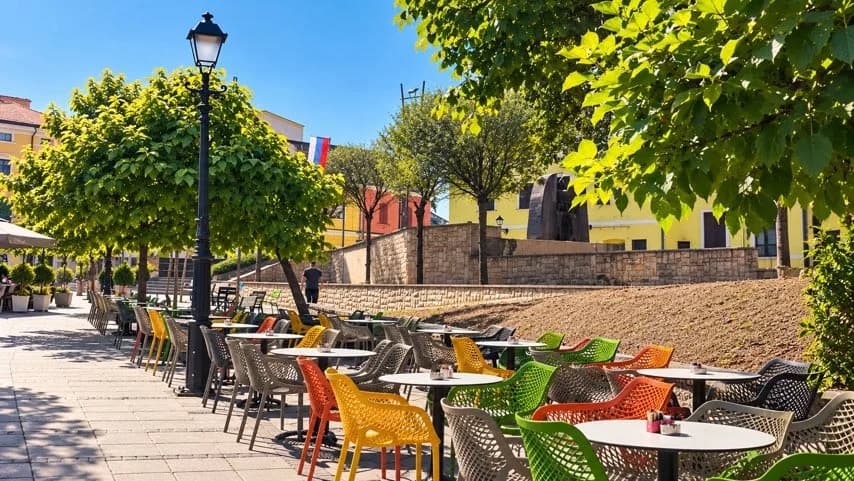
I had never been to Derventa before. I admit, nothing in particular was pulling me there. But over the last year I started noticing something I would call an invisible invitation. A picture, then a video, then another photograph, and all of it suggested that something worth seeing was happening there. When you tell someone you are going to Derventa “as a tourist”, they greet you with mild surprise, and that someone, as a rule, has no idea what the town looks like today. We decided to check for ourselves. One of the roundabouts From Banja Luka the drive takes about an hour. Right at the entrance to town you are met by a handsome, thematically designed roundabout — and not only that one. Almost all of them in the town are conceived in an interesting way: a pan on the scales, scissors… suggestions of the textile industry, because Derventa is primarily an industrial place. Along the way I also noticed a well-kept children’s playground, a sign that urban space is being thought about in more than one dimension, not only the tourist one. I remind myself of something I deeply believe. For a town to be attractive to tourists, it must be a good place to live for the local population. We parked near the main promenade. At weekends parking is free; otherwise a day ticket costs 2 KM. Interestingly, there is also a charger for electric vehicles, a detail that shows the town is following trends. We notice a handsome mural on a nearby building. Mural on a building After breakfast we set off for a walk across the main square. Although it was already 11 in the morning, the town seemed almost empty, just the occasional passer-by. Streets clean, waste bins tidy. You get the impression that this is taken care of with particular attention. Orthodoxy Square Details from the main square At the Church of the Dormition of the Most Holy Theotokos we stopped by an outdoor chessboard. A pensioner came up to us and asked where we were from. I told him my wife is from Banja Luka, I am from Herzegovina. He immediately mentioned that Derventa has quite a few people from Herzegovina, and named a well-known surname: Nozica. Chessboard We continued on and, off to the side, noticed the Posavska kuca shop. An idea that, following the good practice of Hercegovacka kuca in Trebinje, has taken root in several regions. We passed the Catholic Cathedral of St George and the Ali-aga Mosque. There is a fountain too, benches, and in a few places swings fitted in with a pleasant aesthetic. It is not unusual in our parts for the places of worship of all three confessions to stand so close together, and Derventa is one of those towns. That says enough about multicultural wealth, the connectedness of peoples, and, unfortunately, the absurdities of the times and the narrative we live in. Fountain and the Ali-aga Mosque Fountain and a view of the Town Hall At the edges of the square, from the building materials, you can see that the arrangement is still going on. There are also the Homeland Museum and the Town Hall. The whole setting feels European. A little farther on, by the Cultural Centre, a whole family was photographing themselves beside a telephone booth. So did we. We decided that was enough for the morning and went on. We visited the viewpoint above the town, a nicely arranged and well-conceived location. Patkovaca picnic site In the meantime we reached the Patkovaca picnic site. A nice approach, a well-kept picnic area and bathing spot on the Ukrina River. There were people there. We met a family, and the conversation was started, a little symbolically, by the same name of their child and ours. We freshened up a little and went on. On my mind were the Detlak ambarine and Kalenderovac cheese. People I know had warned me I would have a hard time finding the cheese outside the village, and they were right. I passed through Kalenderovac, but I did not meet anyone I could ask, let alone anyone I could buy from. Donja Bisnja Monastery and the Ambarine We stopped at Donja Bisnja Monastery. We found no one; we were alone. We spent some time there and went on, toward Detlak and the Ambarine. We reached the monastery church of the Holy Prophet Elijah, but I did not know how to go on to the ambarine themselves. This is where I have to make a remark: information about sites and tourist signage must be at a considerably higher level. The sites are simply not marked, nor do they offer any additional information to the visitor on the spot. Fortunately, in the churchyard we found a kind lady who gave us all the directions we needed. It turned out she was the abbess’s own sister. We went into the church, then through the yard toward the ambarine. A small gate leads into the unknown — a path of wooden walkways and steps takes you down into a grove; at this time of year it has not been cleared, but it is quite passable. Monastery church of the Holy Prophet Elijah The Detlak ambarine The Ambarine are a phenomenon and probably one of the most mystical sites I have seen in our parts so far. There are 23 pits, up to three metres deep, carved into the stone, presumed to have once been used for storing food. The story says that fossils were also found in those pits, confirming that in the distant past the Pannonian Sea stretched here. When we finished the visit it was already late evening. Tired but satisfied, we agreed we would come back very soon, because there is more to see. Derventa, for example, also has two wineries, and it is known for a fair that, since 1851, has been held at the end of August. A detail from town – the Ciro train What, in the end, to say about Derventa? Absolutely worth the attention and the visit. One argument also comes from geography, because the EU border is only some twenty kilometres away. In the meantime I also received the information that the town will soon get a luxury hotel with conference and spa facilities, which, together with the trend of arranging the urban core and increasingly present investment, supports the thesis that Derventa will slowly but surely become interesting to a growing number of tourists.
A small case study in authenticity
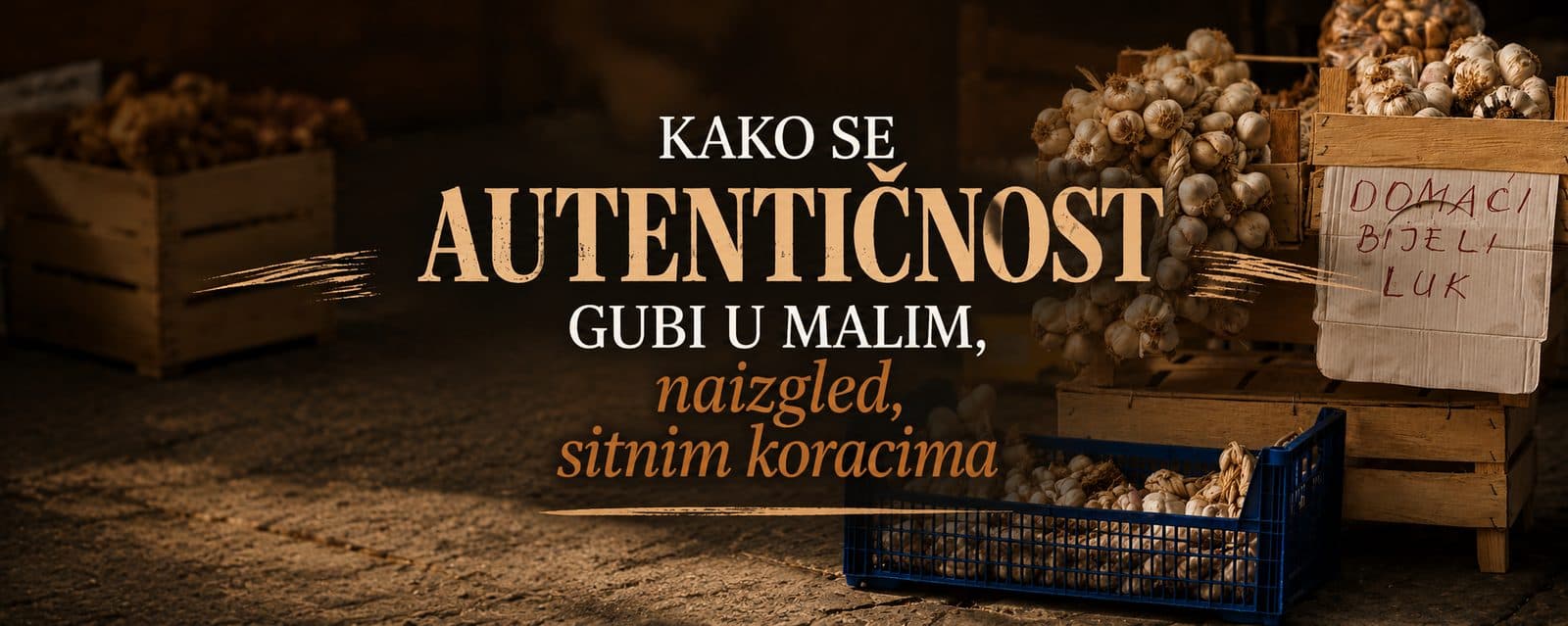
At the green market in Trebinje, a sign reads "white garlic" next to what has always been called saransak or cesan. The green market has long been a synonym for gathering, a place of local supply and demand, conversation and commentary. For a long time people have stopped by as if by duty and bought home-grown produce. From Trebinje, or from a little farther away, from the neighbors. Why white garlic, and not saransak? Probably so they would not have to explain it to the buyer, so they would not have to repeat the same story to the tenth customer, so they would not waste time on a word half the people do not know. You call it what the customer calls it. You sell faster. But every time we replace a local name with a universal one, we lose something that is hard to bring back later. Saransak carries place, language, and the generations that called it that. White garlic is the same product, of course, but without a local address. When you sell saransak, you have sold a local product with an authentic name. You have gained an experience and new knowledge. When you sell white garlic, you have sold, or bought, white garlic you can find at your own market too. Saransak has an address; white garlic does not. Tourism lives from that address. From what cannot be bought at another market, in another town, at least not under that name. And not with the same value. And when we erase the word, we erase part of that value too. I am not talking about nostalgia. I am talking about a resource that disappears just as quickly as any other when no one protects it or uses it.