
Derventa - the town that waited to be noticed
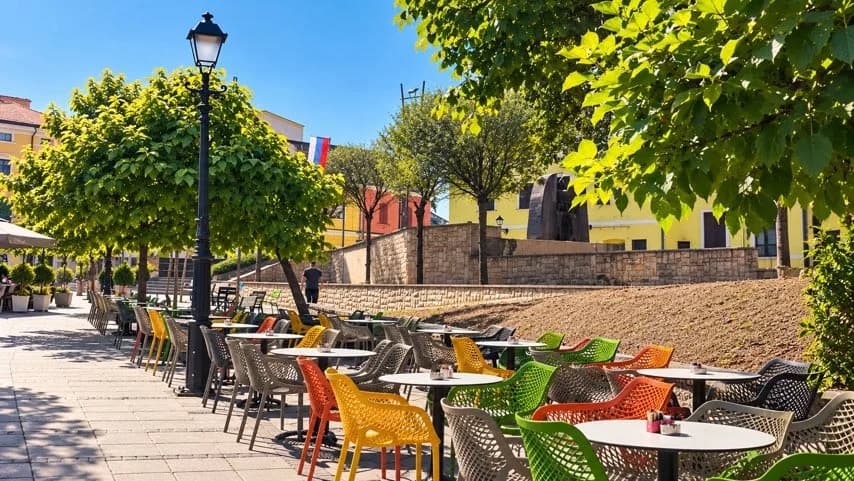
I had never been to Derventa before. I admit, nothing in particular was pulling me there. But over the last year I started noticing something I would call an invisible invitation. A picture, then a video, then another photograph, and all of it suggested that something worth seeing was happening there. When you tell someone you are going to Derventa “as a tourist”, they greet you with mild surprise, and that someone, as a rule, has no idea what the town looks like today. We decided to check for ourselves.
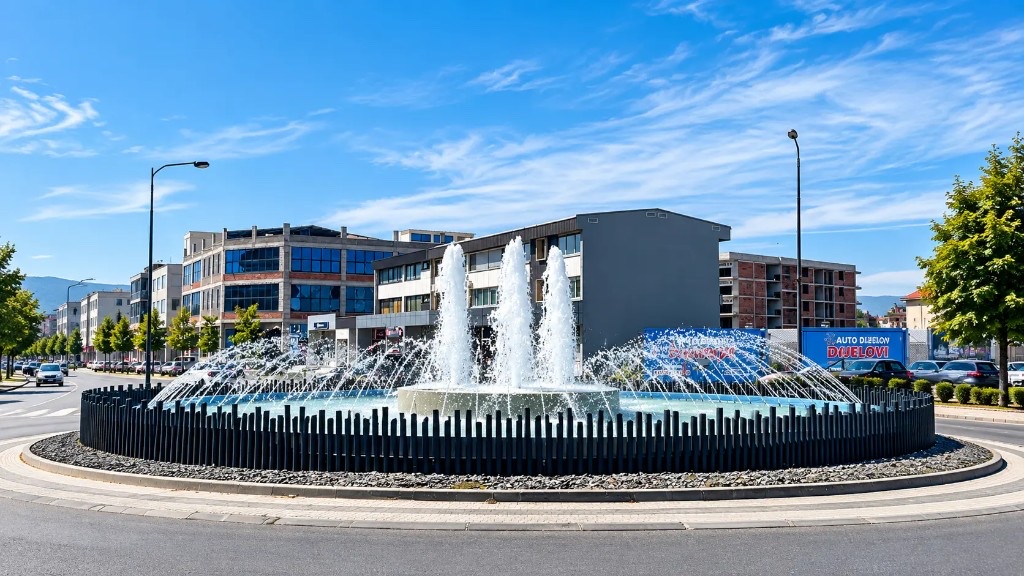
From Banja Luka the drive takes about an hour. Right at the entrance to town you are met by a handsome, thematically designed roundabout — and not only that one. Almost all of them in the town are conceived in an interesting way: a pan on the scales, scissors… suggestions of the textile industry, because Derventa is primarily an industrial place. Along the way I also noticed a well-kept children’s playground, a sign that urban space is being thought about in more than one dimension, not only the tourist one. I remind myself of something I deeply believe. For a town to be attractive to tourists, it must be a good place to live for the local population.
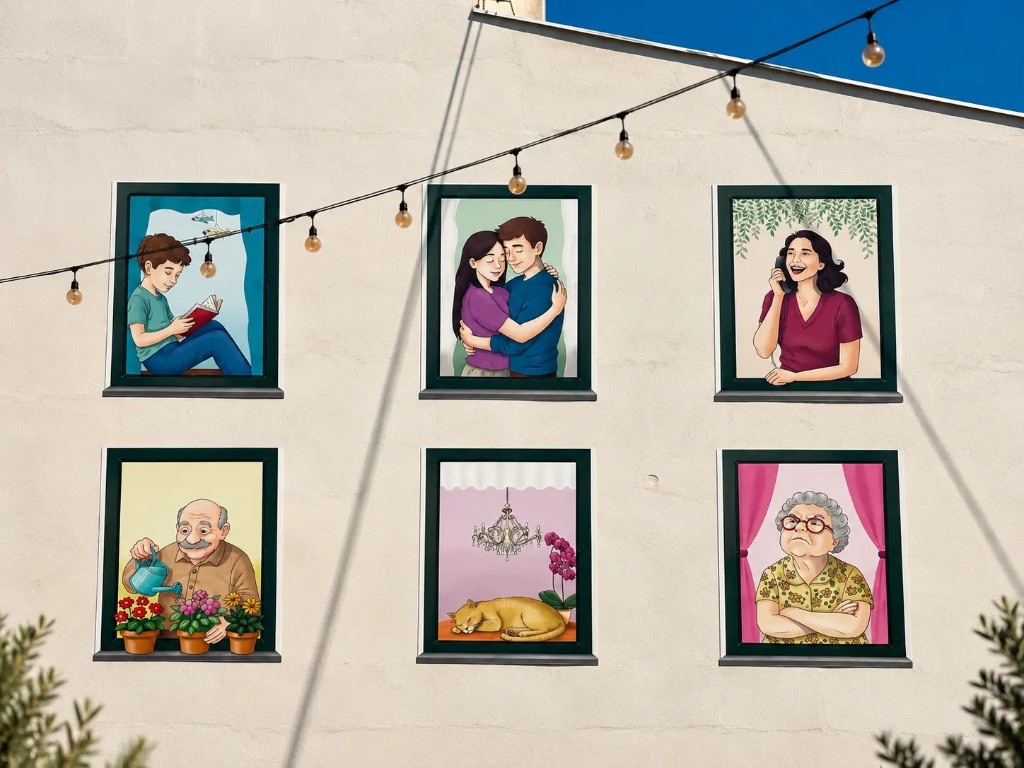
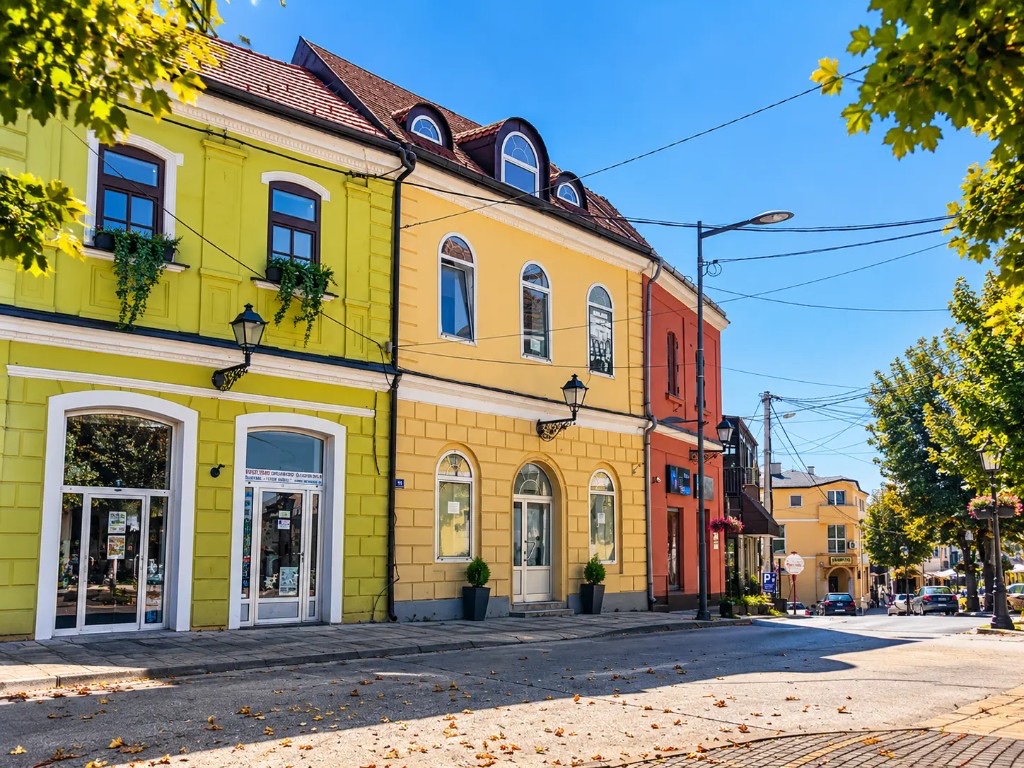
We parked near the main promenade. At weekends parking is free; otherwise a day ticket costs 2 KM. Interestingly, there is also a charger for electric vehicles, a detail that shows the town is following trends. We notice a handsome mural on a nearby building.
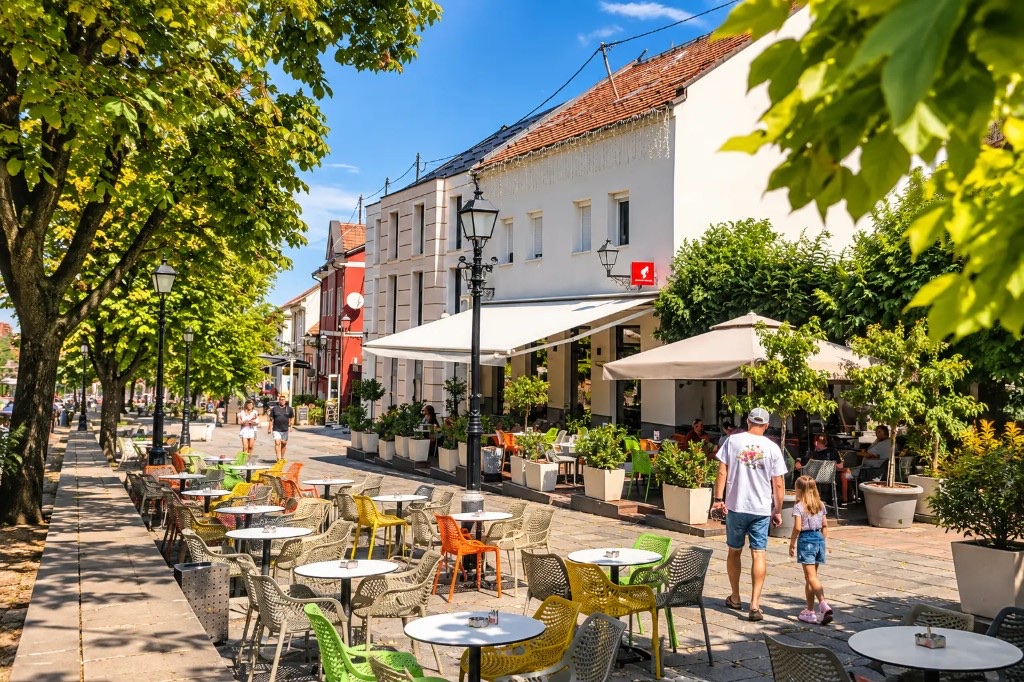
After breakfast we set off for a walk across the main square. Although it was already 11 in the morning, the town seemed almost empty, just the occasional passer-by. Streets clean, waste bins tidy. You get the impression that this is taken care of with particular attention.
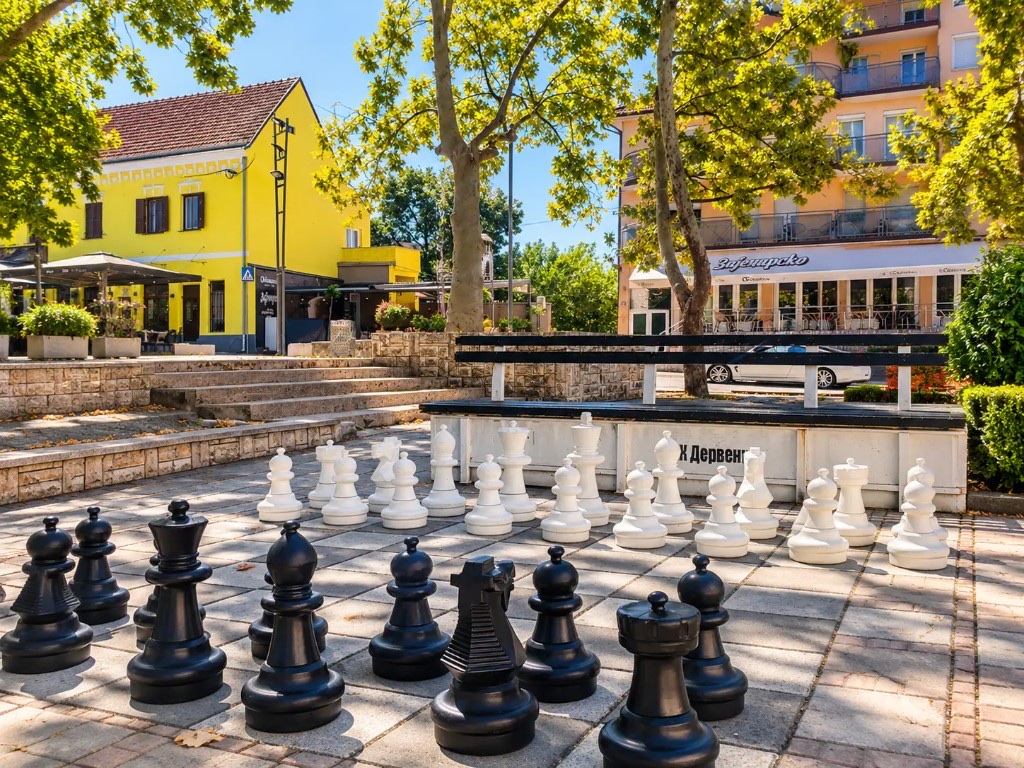
At the Church of the Dormition of the Most Holy Theotokos we stopped by an outdoor chessboard. A pensioner came up to us and asked where we were from. I told him my wife is from Banja Luka, I am from Herzegovina. He immediately mentioned that Derventa has quite a few people from Herzegovina, and named a well-known surname: Nozica.
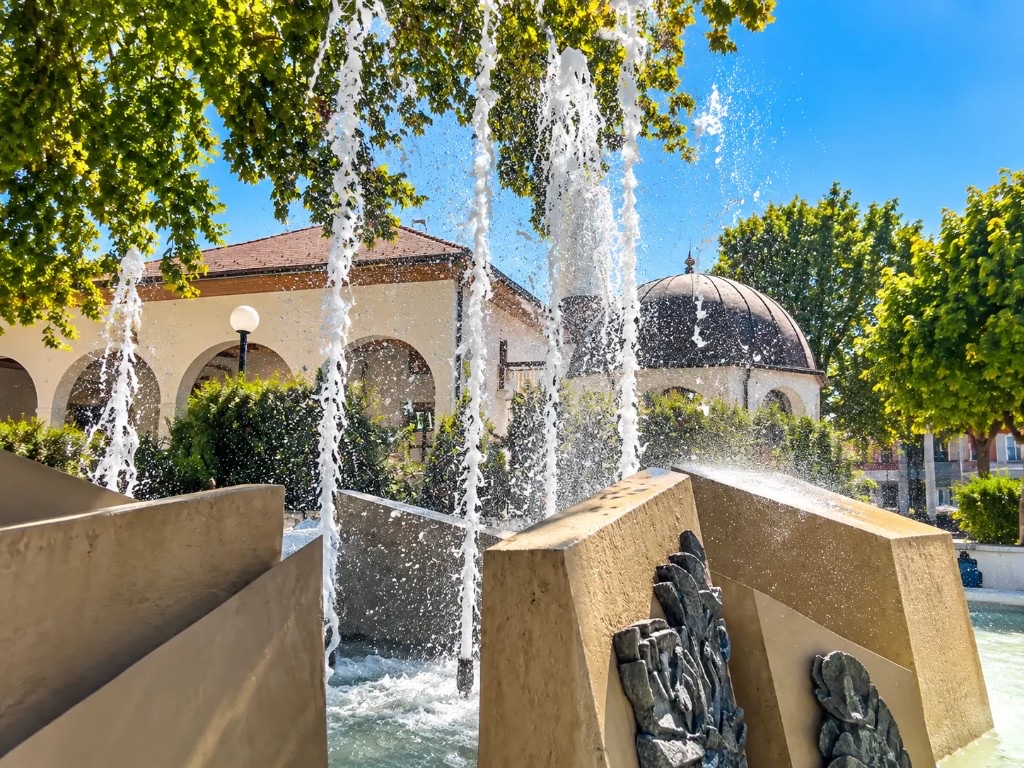
We continued on and, off to the side, noticed the Posavska kuca shop. An idea that, following the good practice of Hercegovacka kuca in Trebinje, has taken root in several regions. We passed the Catholic Cathedral of St George and the Ali-aga Mosque. There is a fountain too, benches, and in a few places swings fitted in with a pleasant aesthetic. It is not unusual in our parts for the places of worship of all three confessions to stand so close together, and Derventa is one of those towns. That says enough about multicultural wealth, the connectedness of peoples, and, unfortunately, the absurdities of the times and the narrative we live in.
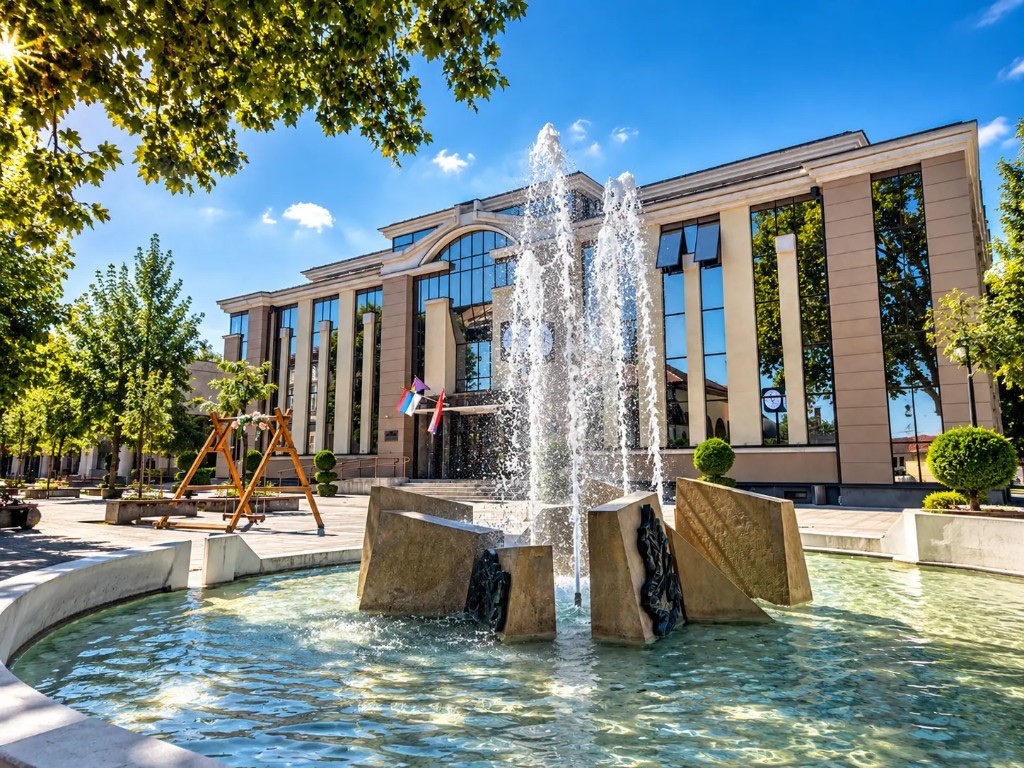
At the edges of the square, from the building materials, you can see that the arrangement is still going on. There are also the Homeland Museum and the Town Hall. The whole setting feels European. A little farther on, by the Cultural Centre, a whole family was photographing themselves beside a telephone booth. So did we. We decided that was enough for the morning and went on. We visited the viewpoint above the town, a nicely arranged and well-conceived location.
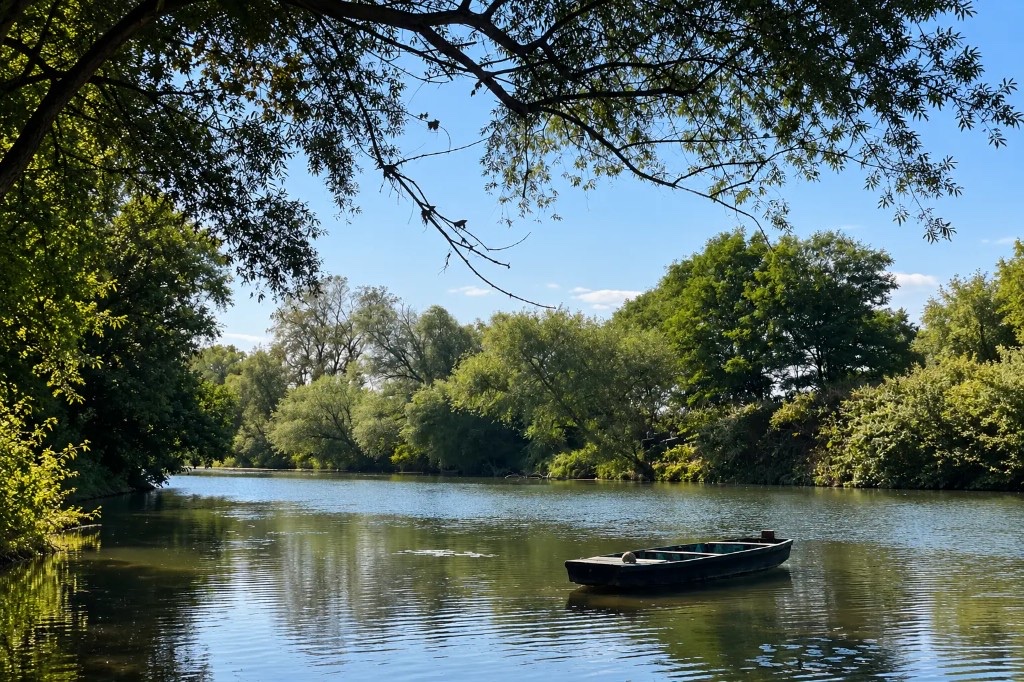
In the meantime we reached the Patkovaca picnic site. A nice approach, a well-kept picnic area and bathing spot on the Ukrina River. There were people there. We met a family, and the conversation was started, a little symbolically, by the same name of their child and ours. We freshened up a little and went on.
On my mind were the Detlak ambarine and Kalenderovac cheese. People I know had warned me I would have a hard time finding the cheese outside the village, and they were right. I passed through Kalenderovac, but I did not meet anyone I could ask, let alone anyone I could buy from.
Donja Bisnja Monastery and the Ambarine
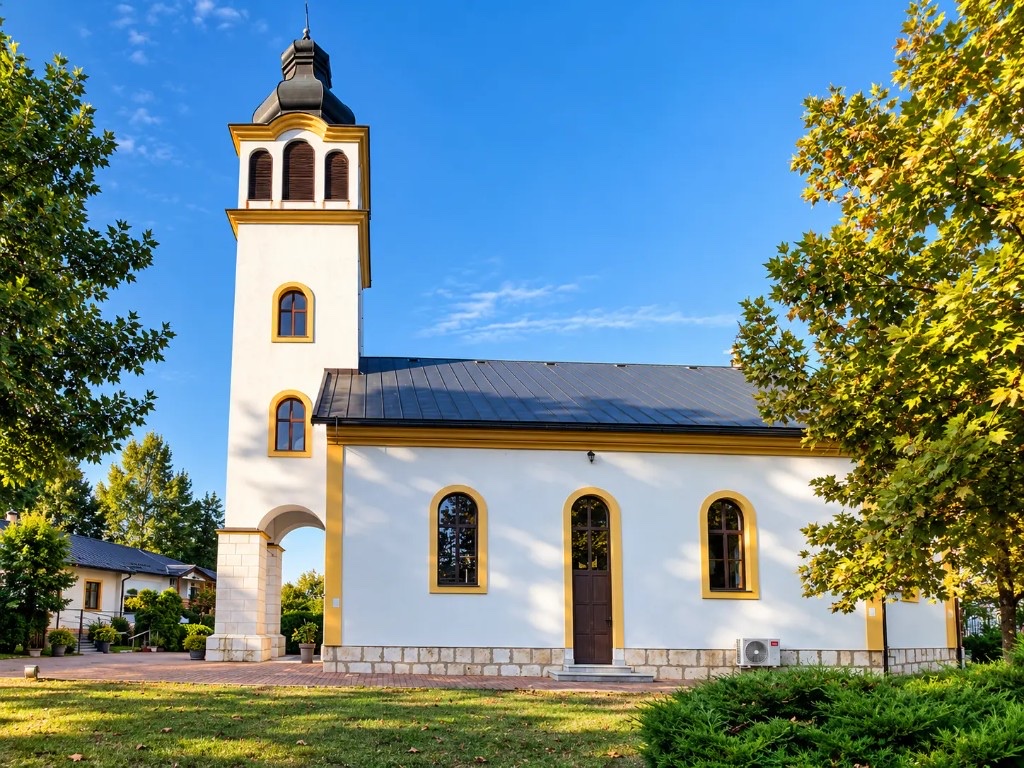
We stopped at Donja Bisnja Monastery. We found no one; we were alone. We spent some time there and went on, toward Detlak and the Ambarine. We reached the monastery church of the Holy Prophet Elijah, but I did not know how to go on to the ambarine themselves. This is where I have to make a remark: information about sites and tourist signage must be at a considerably higher level. The sites are simply not marked, nor do they offer any additional information to the visitor on the spot.
Fortunately, in the churchyard we found a kind lady who gave us all the directions we needed. It turned out she was the abbess’s own sister. We went into the church, then through the yard toward the ambarine. A small gate leads into the unknown — a path of wooden walkways and steps takes you down into a grove; at this time of year it has not been cleared, but it is quite passable.
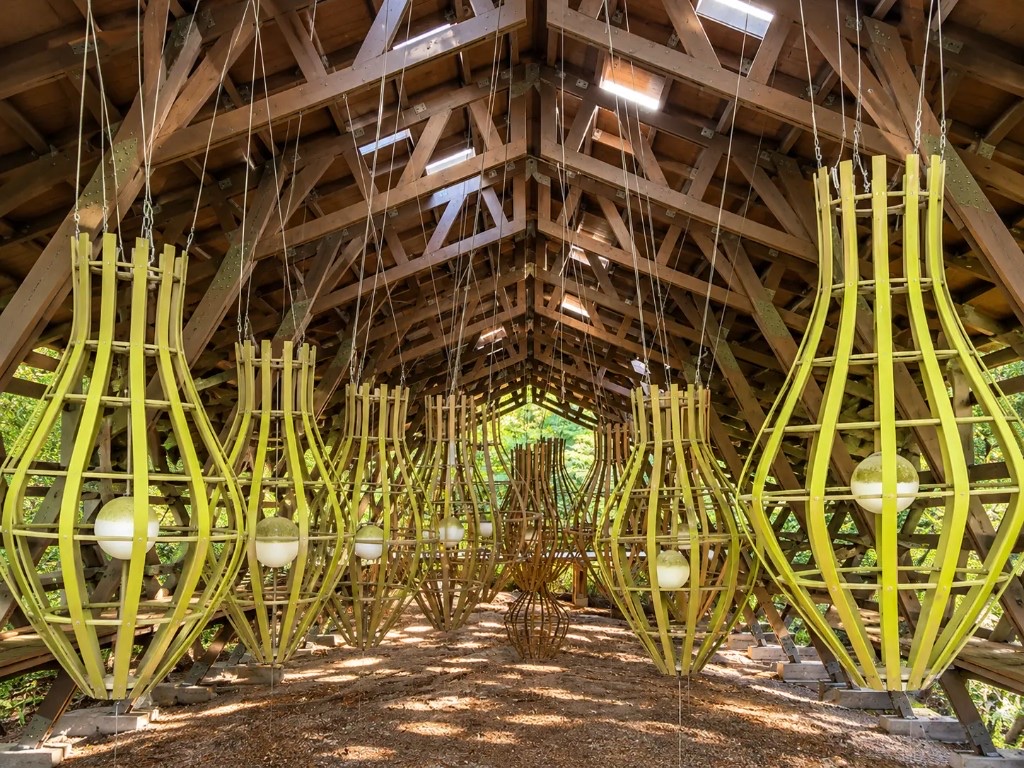
The Ambarine are a phenomenon and probably one of the most mystical sites I have seen in our parts so far. There are 23 pits, up to three metres deep, carved into the stone, presumed to have once been used for storing food. The story says that fossils were also found in those pits, confirming that in the distant past the Pannonian Sea stretched here.
When we finished the visit it was already late evening. Tired but satisfied, we agreed we would come back very soon, because there is more to see. Derventa, for example, also has two wineries, and it is known for a fair that, since 1851, has been held at the end of August.
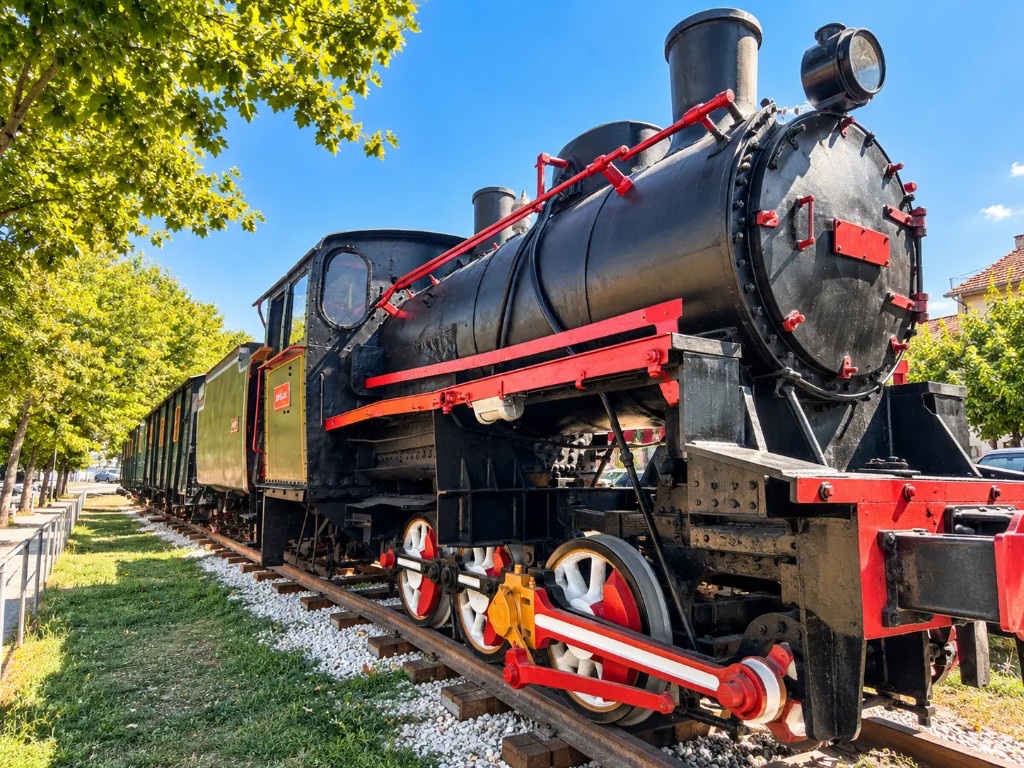
What, in the end, to say about Derventa? Absolutely worth the attention and the visit. One argument also comes from geography, because the EU border is only some twenty kilometres away. In the meantime I also received the information that the town will soon get a luxury hotel with conference and spa facilities, which, together with the trend of arranging the urban core and increasingly present investment, supports the thesis that Derventa will slowly but surely become interesting to a growing number of tourists.
Similar posts
Sipovo on the water
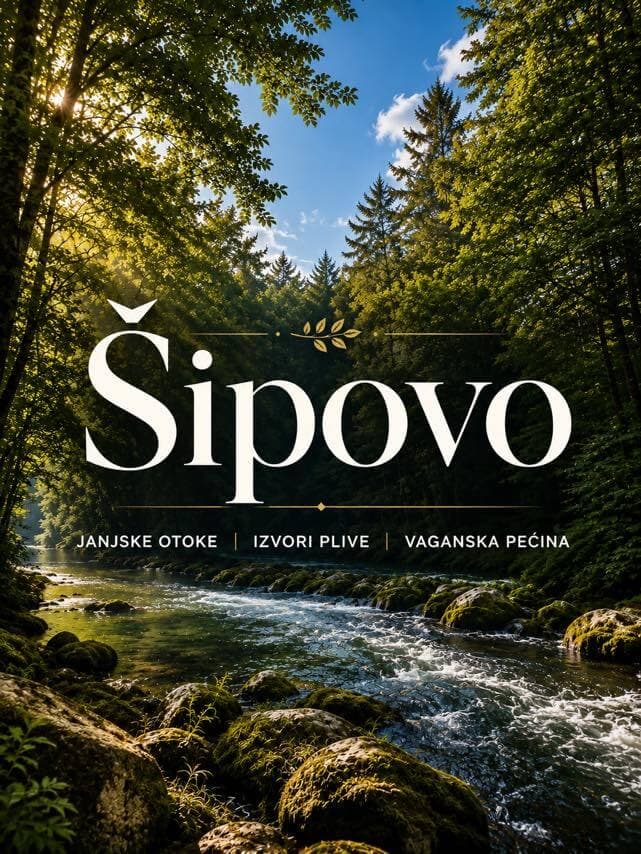
This is not my first time in Sipovo, but I have to admit that, unlike the last visit, the place feels much more touristy than before. At every turn there are apartments, bungalows, cottages, eco zones — of this kind and that, to be fair — but it is quite clear that a good part of the locals has started to take on the role of host. That is good for this place, because the situation with the attitude toward nature is critical, and I hope that a strong interest from locals and a significant flow of visitors will protect it — in the sense of seeing nature as a tourism resource from which the whole community can benefit, not only a few individuals. Source of the Pliva River Sipovo has, if one can put it this way, breathed out after corona. It has been discovered. We all discovered it a little, promoted it, saw something unique, important and potent to sell. Walking around, I feel a little important, because I know how many times and in how many places and occasions, recognising the potential, I promoted this place. There is still a great deal to do and to put in order. Some of the things I saw are not dear to me, but this text is not about that. Crowds on the islets At the Janj islets a crowd was waiting for me. Parking is paid, but so many cars parked in every possible way is itself enough to create unease. There is a bus as well, just arrived. As usual, I check in with Dragana first. I wanted to yesterday too, but that was impossible because of the crowds. The Janj islets at Dragana’s… colourful, sweet and packed like a pomegranate. Konoba kod Dragane Unlike some previous visits, it is noticeable that other locals have organised too, so you have a few more options nearby to sit down. It is not at some high level, let’s be clear, but decent in a village way. In the end you come for something like that. Fine, the bench for sitting could be repaired, because you are charging for sitting on it. But those are details. Waterfalls and “compensation” Earlier you could not really reach the waterfalls; now you can, along a nice gravel road. Again it is through private land, and passage is free, although a kind woman at the entrance, and a sign as well, suggest you buy something as compensation. The beer is cold. Prices are symbolic, but you know how the saying goes: grain by grain. My older boy even got a candy. The waterfalls are beautiful. One approach is easy; the other demands great caution because of the height and the terrain. And there too you can see locals selling, mostly refreshments at symbolic prices. Nearby there are houses that rent accommodation. The impression is that everyone is renting accommodation. Demand does its work. I conclude that many people walk, circulate, leave and arrive. Sunday, it seems, is a special day for a weekend visit to the Janj islets. I see that also by comparing it with the trip to the source of the Pliva, where we were the only ones. There were no crowds on the visit to Vagan Cave either, but there was circulation there too. They have done it up nicely. The approach is paved. The explored part of the cave that is allowed for visits and tours is not long, so you can finish relatively quickly. Vagan Cave is worth visiting. Perhaps some basic equipment should be provided, say protective helmets. The cow as an attraction Back to the islets. Cows are all around us. From their milk comes one of the most beautiful cheeses we have — Janjska pletenica. It is interesting how many people photograph them. The impression is that they are an attraction. Carried by that, I photograph them too. And I often talk about this in the media and in workshops: original, simple, everyday situations, under the pressure of great changes in the way of life and its speed, are changing. We have become estranged from what we were. The cow is an attraction. Raj na vodi A few hundred metres from the main parking there is a nicely and tastefully arranged cafe/restaurant, “Raj na vodi”. You can also approach by car. Lord, it is terribly Instagrammable. There are plenty of details that wake your interest. Every guest holds a phone, turns their head and just clicks. I am here for the first time. The trout was tasty. I keep thinking how almost the entire Janj islets are photogenic. A formidable extra motive for coming, in today’s world “on a click”. Time will tell whether Sipovo, with its springs, rivers, caves, old-growth forests and the Janj islets, will manage to make a quality, sustainable story. Whether it will make a recognisable and unobtrusive setting, grounded in natural phenomena and an authentic experience — because it definitely has all the preconditions for that — or whether over time it will go to the completely opposite extreme. The chances, at this moment, are even.
Visegrad. Between stone and words.
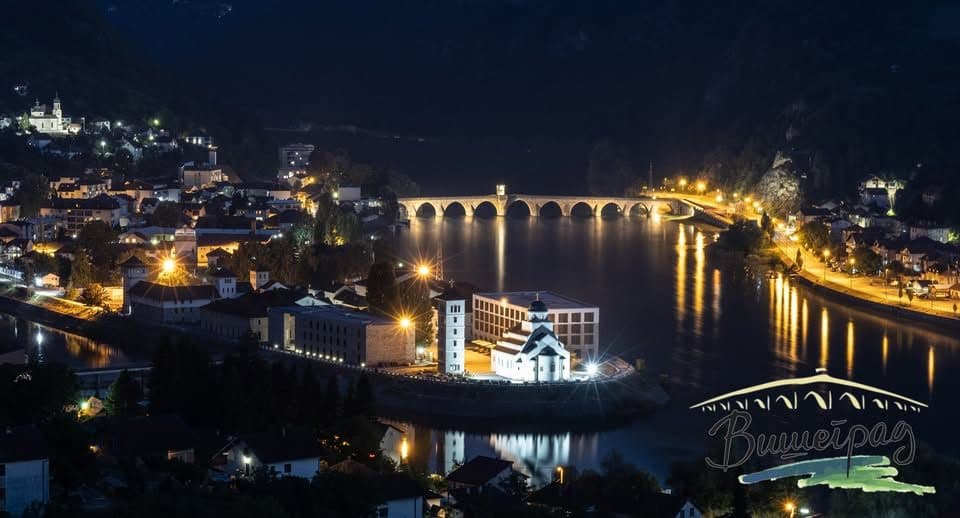
I am currently working on the Tourism Development Strategy for the municipality of Visegrad. When you deal with the strategic planning of a destination, you inevitably face numbers, capacities and infrastructure. Visegrad has weight. Visegrad is anything but ordinary. That is why, for the first time since secondary school, I took The Bridge on the Drina down from the shelf. This time, I admit, not superficially and out of duty, not as a student, but as a tourism professional with decades of experience. And I realised one thing: Ivo Andric wrote the most important branding guide for this place that we will ever have. In school, Andric was an obligation — pages you flipped through with resistance, whether we admit it or not. Those were sentences whose weight I could not carry, because I was not old enough to understand what “duration” means. Then it was an assignment. Today, as I think about the concept of Visegrad’s tourism product, I read the same book with different eyes. The eyes of someone who understands that a destination must also be an emotion. Fotografija: Marko Radić The bridge of Visegrad, the masterpiece of Mehmed Pasa Sokolovic, is for some passers-by only a photogenic spot; for others it is proof that an individual can leave a work that outlives politics, borders and time. UNESCO recognition, which will soon mark twenty years, is an obligation, a status, and today also a marketing tool. Why an obligation? Because we are obliged to tell visitors about encounters, suffering and hope. We are obliged to pass on the emotion. Visegrad is anything but ordinary. We often forget the power of the fact that we have a Nobel laureate. That prestigious award, never repeated in these parts, confirms that the story of the Drina is universal — and Andric becomes the translator of our complex history into a language the world can understand. “A people remembers and retells what it can grasp and what it manages to turn into legend. Everything else passes it by without a deeper trace, with the indifference of nameless natural phenomena; it does not stir the imagination and does not remain in memory.” When a foreign visitor comes to Visegrad, they want to feel the universality of a small place and a great story. That is the essence of what we call “storytelling” in tourism. Andric left us a gold mine of stories; it is up to us to tell them in a way today’s guest understands. As I walk through Visegrad, I see layers that sometimes conflict, yet together form a complete offer. On one side there is the modest house of Andric’s childhood and his classroom — authentic witnesses to the forming of a genius. And there is the powerful green Drina. Fotografija: Marko Radić On the other side, at the mouth of the Rzav, stands Andricgrad. Emir Kusturica’s vision. Tourism today asks for content. Critics say Andricgrad commercialises the myth, but visitors find an experience there. Visegrad is anything but ordinary. Visegrad will not spoil you with a simple story. It offers the bridge as authenticity and Andricgrad as content. And it is precisely that blend of old and new, the silence of the bridge and the bustle of the town, that keeps the destination alive. As I write, I keep asking myself — and answering — the same questions. What is tourism, and what are we actually selling? Tourism does not ask for sterile beauty. It asks for authenticity. Depth. Emotion. Returning to Andric, I realised that a tourism development strategy must not be only about beds and roads. It must be about a return to understanding. Our task is to bring the guest to the bridge not for a selfie, but to feel what Andric wrote in the silence of wartime Belgrade: that, as he says, “life is an incomprehensible miracle that is constantly spent and worn away, and yet endures and stands firm, like the bridge on the Drina.” That is the value Visegrad holds. That is the value we must offer the world we want to bring here. And you — have you visited Visegrad lately, and have you felt the “weight” of time that Andric writes about?
Storytelling the Yugoslav way
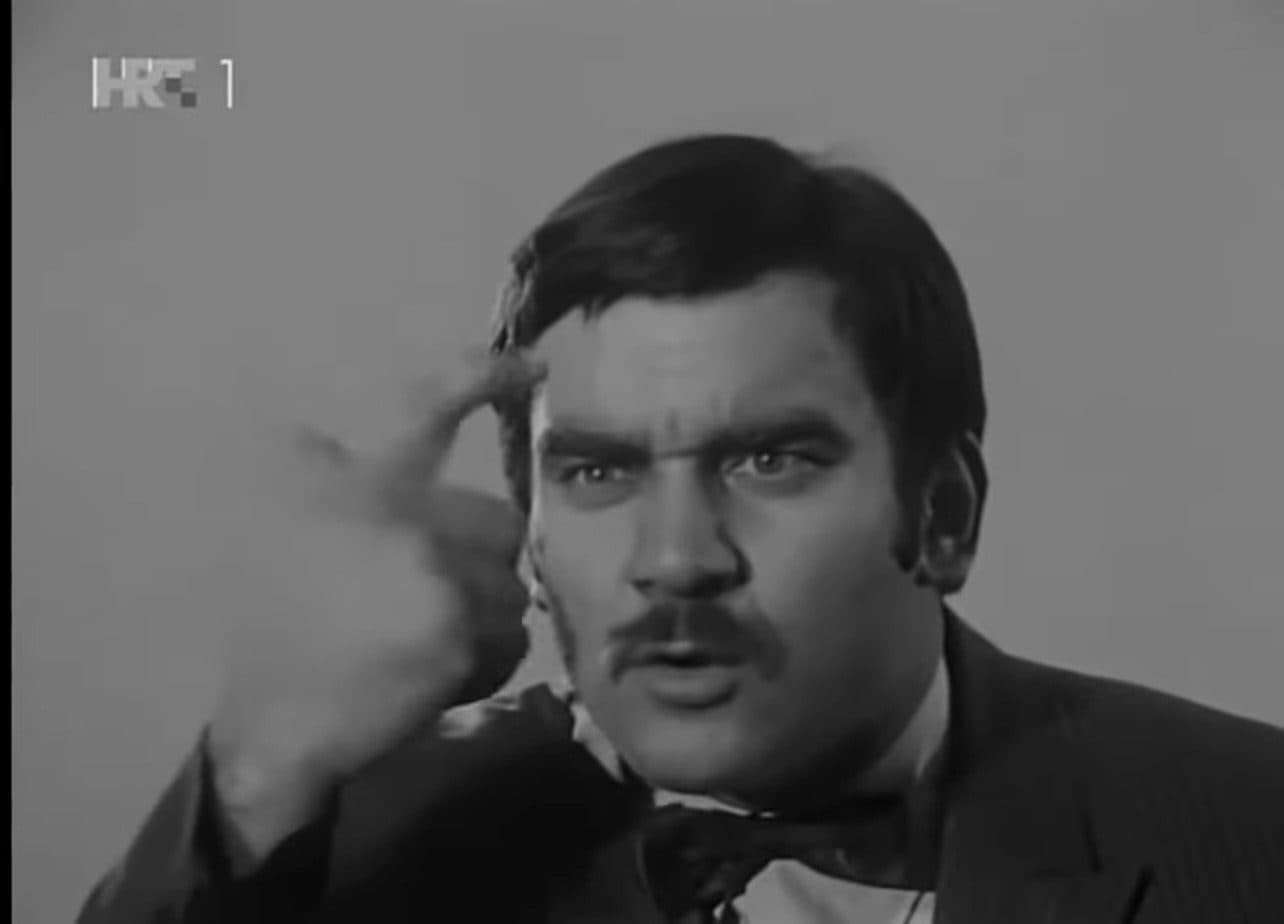
The famous series Nase malo misto , filmed in the late sixties and early seventies, is best remembered by the boomer generation. But a line spoken in one episode by Boris Dvornik , as Roko , the hotel director, has remained universal: “What does tourism care about historical truth? That is what Roko asked, criticising a professor who caused a scandal while guiding a group of Germans by telling them that Germans had burned the houses above the church. The professor replies that it is historical truth , and Roko tells him: “What does tourism care about historical truth — and remember this: when you guide Germans, say the Italians burned them; when you guide Italians, say the Germans burned them; when the group is mixed, say the Americans did it; and if every nationality is in there, you understand, then say we burned them ourselves, we Balkan people — who else?” Through satire and humour, this dialogue hides a deep truth about tourism: as a social activity it has never been only physical travel, but also a play of perception, expectation and interpretation. What we would today call storytelling in tourism. Even then, half a century ago, it was clear that tourism lives on the story and on the way reality is presented to the visitor. HRT1, youtube print screen Today, when 50–60 times more people travel than in that period, the message is just as relevant. People want to rest, see and experience something new, but few want their holiday complicated by uncomfortable facts or a sense of insecurity. That is why tourism is still, first and foremost, storytelling: choosing how history, culture, identity and the local way of life are best interpreted through the experience of conveying an impression to visitors. In that sense, authenticity is the key . Stories must be attractive and emotional, yet faithful enough to make a destination recognisable and distinctive. Precisely in that balance between comfort and truth, pleasure and knowledge, lies the greatest challenge of modern tourism. Although many, out of ignorance or an attempt to dismiss it, reduce tourism to mere transport and accommodation, it is far more than that. It is, in fact, a carefully designed combination of experience, education and emotion. Its true strength lies in interpretation — then, in the days of Nase malo misto , and today. The way we tell the story determines how visitors will experience it.