
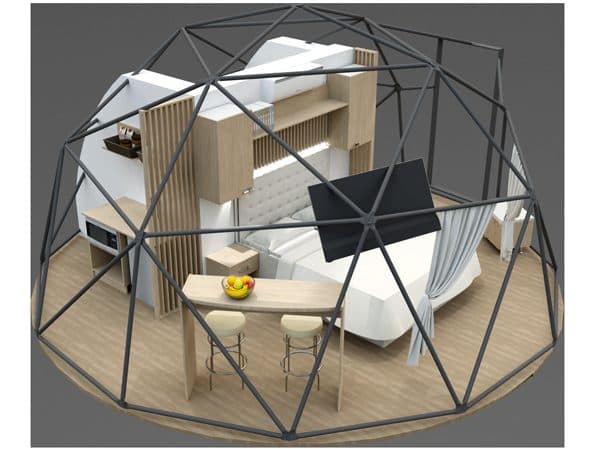
I researched the history of glamping – where, who, when, why – and came to some facts I want to share with you. So, glamping itself was born from joining two words, "glamorous" and "camping", arriving at the name glamping, a word that is new to many, though what comes through it is nothing new.
The word itself appeared in the United Kingdom in 2005, was adopted more widely only after 2010, and entered the Oxford English Dictionary in 2016.
It is a concept that belongs to adventure tourism and offers a balance between adventure and comfort. Instead of classic tents and classic camping, tourists choose more luxurious tents, domes, wooden cabins or mobile homes, equipped like hotels with comfortable beds, air conditioning, internet and toilets, and often with additional facilities such as a pool, wellness, a restaurant and the like, depending on the concept.
They say today's interest in glamping traces back to luxury safari camps in Africa and Thailand, and you can also find legends that people were doing glamping in their own way as early as the 16th century. As an example there is the story of the Scottish Earl of Atholl, who on the highlands for King James V and his mother raised tents filled with everything that adorned his palace, only in the middle of the wilderness. Or an even greater example is the Field of the Cloth of Gold from 1520, when Francis I and Henry VIII raised nearly 2,800 tents and lavish pavilions, and fountains flowed with wine instead of water. So the concept of glamping was applied in its own way even then; only today, through the tourism industry, we have shaped it and given it a concrete name.
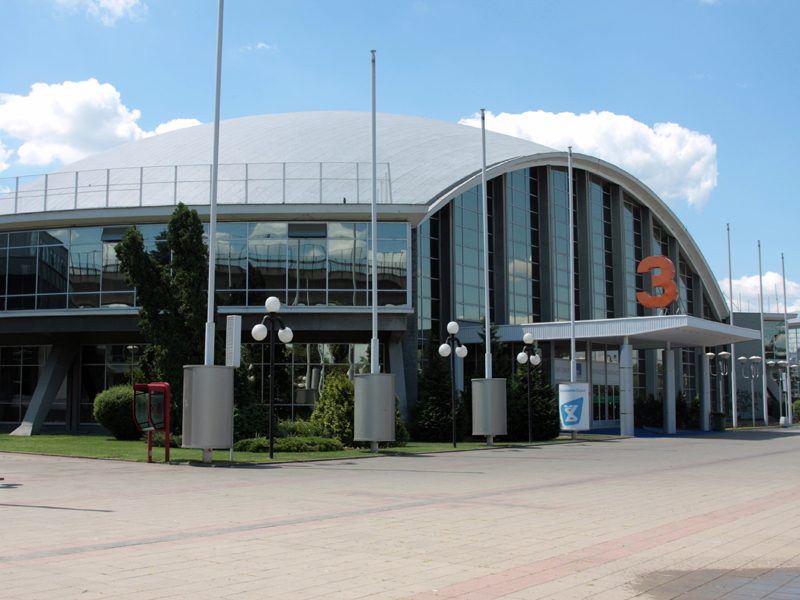
It may be interesting to mention that perhaps the largest dome in this part of Europe – and someone can correct me if I have overlooked something – is Hall 3 of the Belgrade Fair.
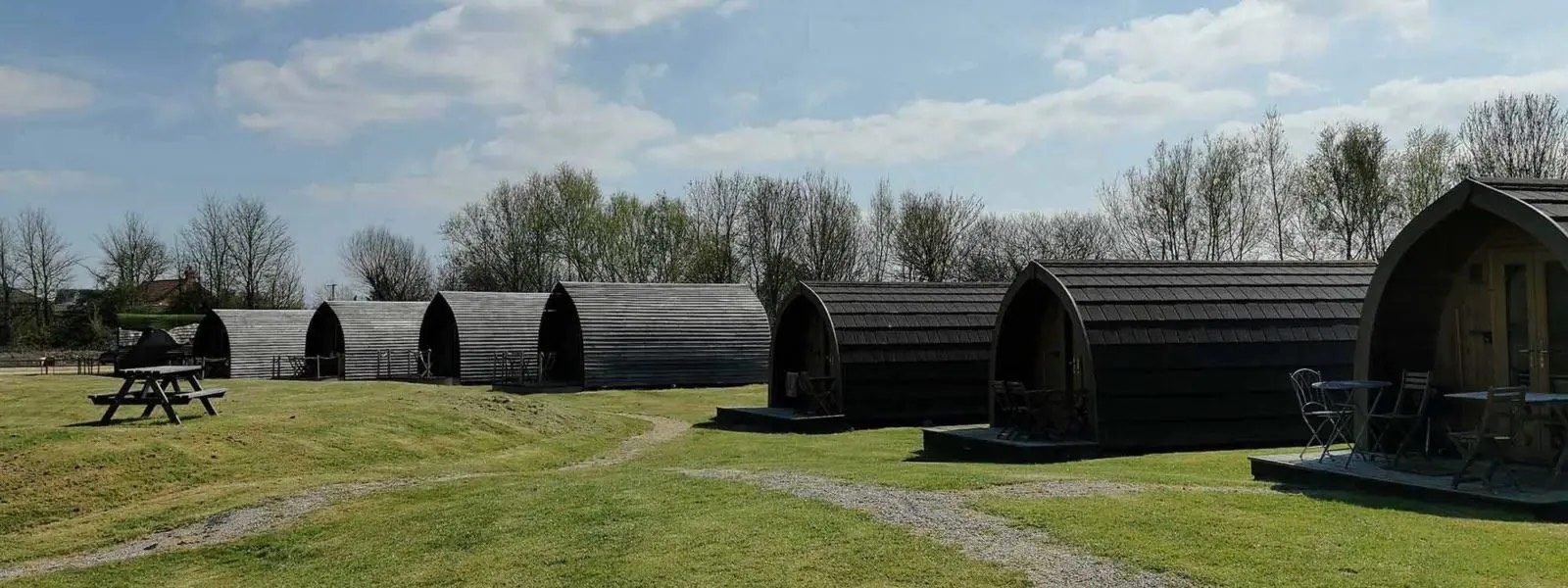
The glamping movement also has its unofficial slogan: "Think outside the tent". And really, who would have said that today there are more than 16 types of glamping, or variations of glamping structures – from tipis, cabins and treehouses to domes, trailers, wagons and the like. Objects can be "scattered" across a location or closer to one another, as a kind of community.
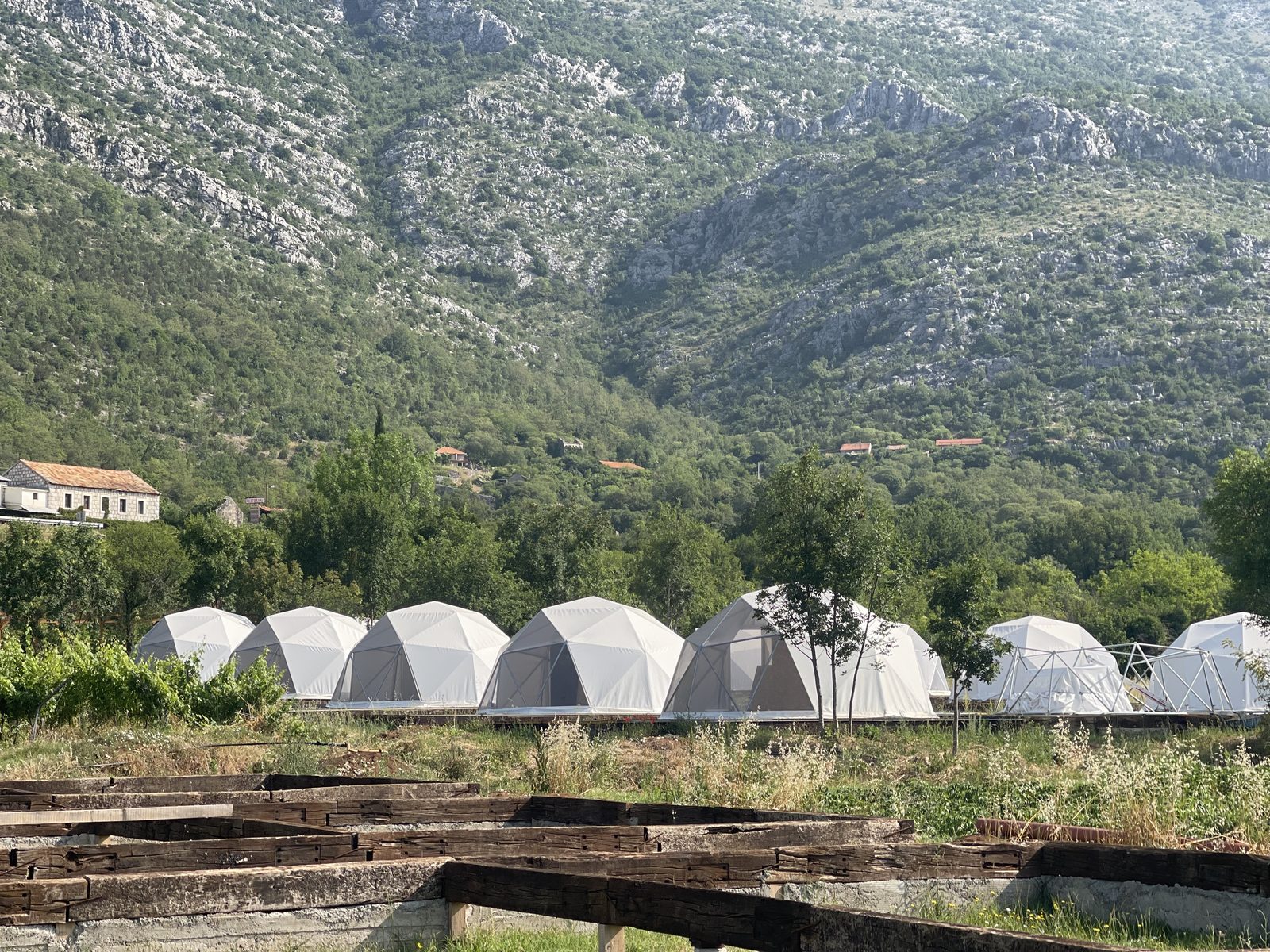
Here, in the first true glamping oasis in Bosnia and Herzegovina, in Dracevo near Trebinje, the choice fell on domes and the "community" option. It involves 22 domes of 28 m² each, with additional facilities such as a pool, a wellness building, an outdoor gym, a shared fireplace, a zip line, paintball, a space for celebrations and much more.
Each cabin will have a QR code for ordering food, from meals to lunch packages, so those who like can even order from bed. Everything is designed for those who want an authentic experience of nature, but still do not want to give up a certain comfort.
Croatia and Slovenia were, as expected, the first to invest in this kind of accommodation, and today you can find different variations of glamping there. That Glamping Oasis Dracevo truly is the first such community in Bosnia and Herzegovina is also shown by the fact that on key websites that promote and offer exclusively glamping as a stay option, for now no option is listed, while on other classic accommodation search sites we can find sporadic cases where one or two properties are offered.
Practice shows that tourists from Western Europe, as far as our continent is concerned, are the main "travellers", and there is no doubt that this kind of accommodation will be most interesting to them, especially because it is a capacity that can receive more guests at the same time while offering them many activities on site. All in all an excellent idea, created for a specific kind of guest at first glance, but then you realise there is no person who will say they do not like nature and a natural setting, though they may not be inclined to camping – and this is for those people seeking an authentic experience without giving up comfort. So we arrive at a wider spectrum of users, although I can almost certainly say that the main guests will be foreign tourists.
An important factor in all of this is also the location of the settlement itself, a meeting point of Herzegovina through a village that belongs to Trebinje, yet only a few kilometres from Vjetrenica, the largest and most beautiful cave in Bosnia and Herzegovina, and Zavala, the most beautiful Orthodox monastery we have, all just half an hour from the Adriatic coast.
Similar posts
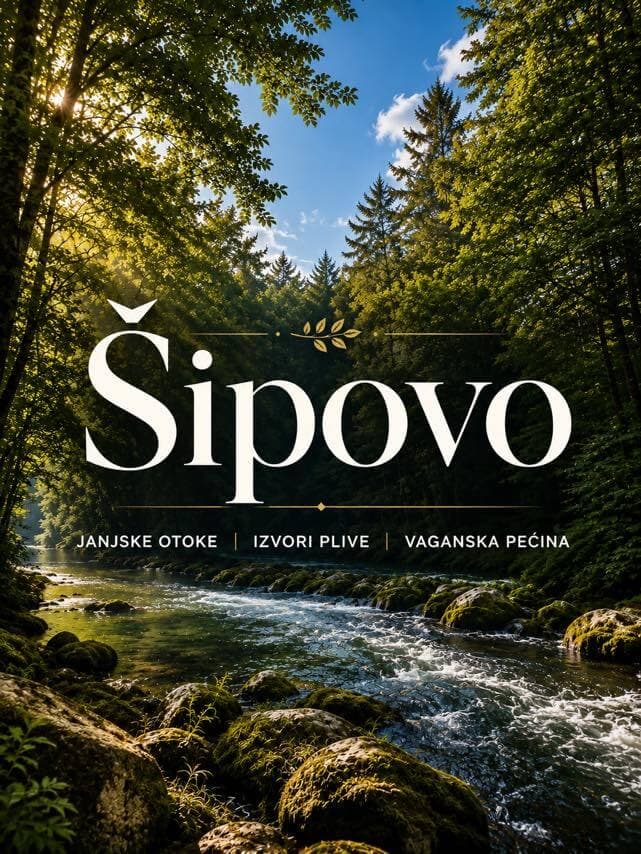
Sipovo on the water
This is not my first time in Sipovo, but I have to admit that, unlike the last visit, the place feels much more touristy than before. At every turn there are apartments, bungalows, cottages, eco zones — of this kind and that, to be fair — but it is quite clear that a good part of the locals has started to take on the role of host. That is good for this place, because the situation with the attitude toward nature is critical, and I hope that a strong interest from locals and a significant flow of visitors will protect it — in the sense of seeing nature as a tourism resource from which the whole community can benefit, not only a few individuals. Source of the Pliva River Sipovo has, if one can put it this way, breathed out after corona. It has been discovered. We all discovered it a little, promoted it, saw something unique, important and potent to sell. Walking around, I feel a little important, because I know how many times and in how many places and occasions, recognising the potential, I promoted this place. There is still a great deal to do and to put in order. Some of the things I saw are not dear to me, but this text is not about that. Crowds on the islets At the Janj islets a crowd was waiting for me. Parking is paid, but so many cars parked in every possible way is itself enough to create unease. There is a bus as well, just arrived. As usual, I check in with Dragana first. I wanted to yesterday too, but that was impossible because of the crowds. The Janj islets at Dragana’s… colourful, sweet and packed like a pomegranate. Konoba kod Dragane Unlike some previous visits, it is noticeable that other locals have organised too, so you have a few more options nearby to sit down. It is not at some high level, let’s be clear, but decent in a village way. In the end you come for something like that. Fine, the bench for sitting could be repaired, because you are charging for sitting on it. But those are details. Waterfalls and “compensation” Earlier you could not really reach the waterfalls; now you can, along a nice gravel road. Again it is through private land, and passage is free, although a kind woman at the entrance, and a sign as well, suggest you buy something as compensation. The beer is cold. Prices are symbolic, but you know how the saying goes: grain by grain. My older boy even got a candy. The waterfalls are beautiful. One approach is easy; the other demands great caution because of the height and the terrain. And there too you can see locals selling, mostly refreshments at symbolic prices. Nearby there are houses that rent accommodation. The impression is that everyone is renting accommodation. Demand does its work. I conclude that many people walk, circulate, leave and arrive. Sunday, it seems, is a special day for a weekend visit to the Janj islets. I see that also by comparing it with the trip to the source of the Pliva, where we were the only ones. There were no crowds on the visit to Vagan Cave either, but there was circulation there too. They have done it up nicely. The approach is paved. The explored part of the cave that is allowed for visits and tours is not long, so you can finish relatively quickly. Vagan Cave is worth visiting. Perhaps some basic equipment should be provided, say protective helmets. The cow as an attraction Back to the islets. Cows are all around us. From their milk comes one of the most beautiful cheeses we have — Janjska pletenica. It is interesting how many people photograph them. The impression is that they are an attraction. Carried by that, I photograph them too. And I often talk about this in the media and in workshops: original, simple, everyday situations, under the pressure of great changes in the way of life and its speed, are changing. We have become estranged from what we were. The cow is an attraction. Raj na vodi A few hundred metres from the main parking there is a nicely and tastefully arranged cafe/restaurant, “Raj na vodi”. You can also approach by car. Lord, it is terribly Instagrammable. There are plenty of details that wake your interest. Every guest holds a phone, turns their head and just clicks. I am here for the first time. The trout was tasty. I keep thinking how almost the entire Janj islets are photogenic. A formidable extra motive for coming, in today’s world “on a click”. Time will tell whether Sipovo, with its springs, rivers, caves, old-growth forests and the Janj islets, will manage to make a quality, sustainable story. Whether it will make a recognisable and unobtrusive setting, grounded in natural phenomena and an authentic experience — because it definitely has all the preconditions for that — or whether over time it will go to the completely opposite extreme. The chances, at this moment, are even.
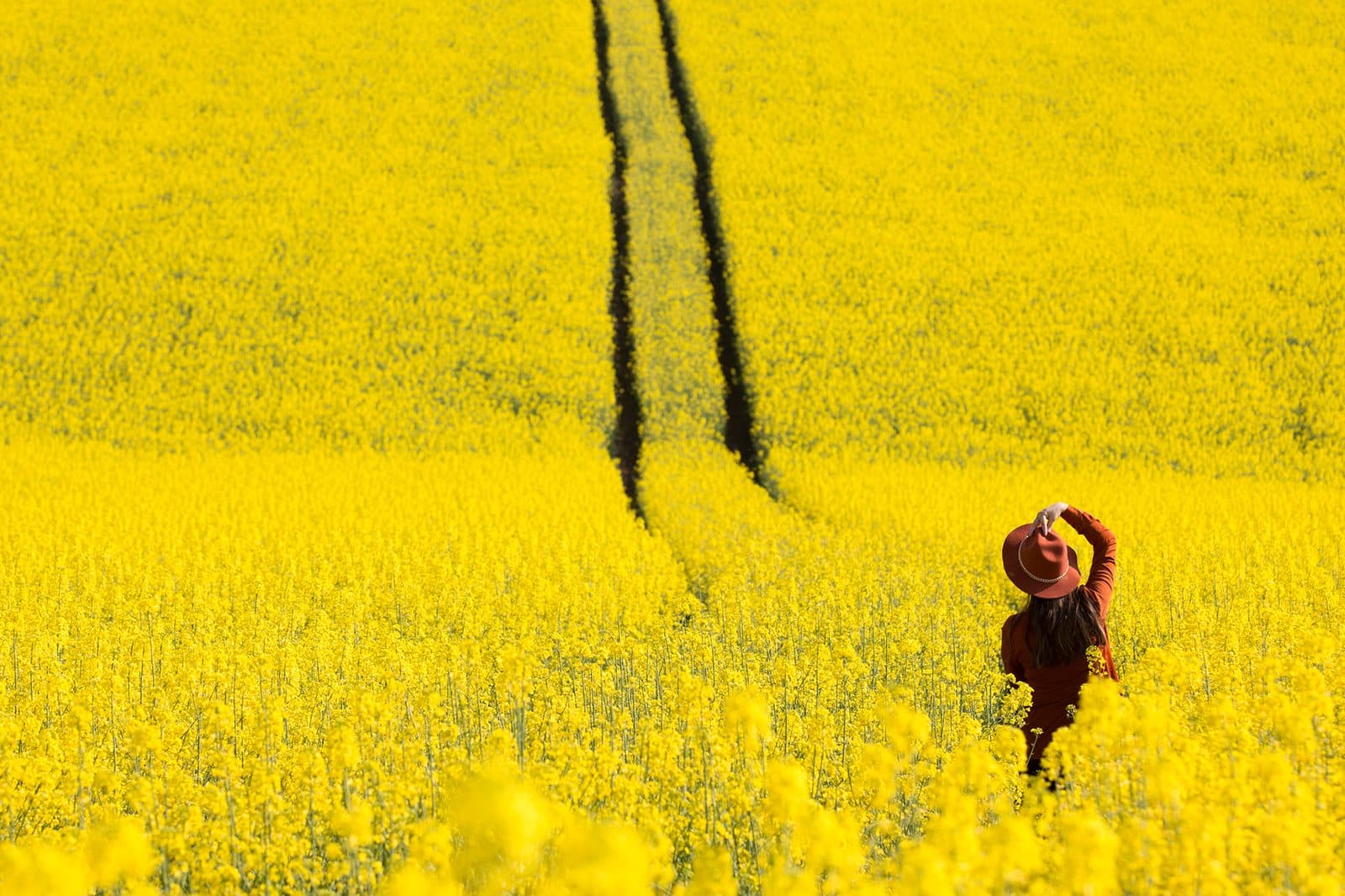
The awakening of early-season tourism
Spring is the season that brings new energy to people, to nature, and to the idea of travel. Days grow longer, the sun warmer, and the colors of meadows and trees more vivid. Everything around us comes into bloom, so it is no wonder that this is when we start thinking about day trips, walks, bikes, hiking trails, and short weekend getaways. After winter stillness, free time once again finds meaning in movement and time outdoors. " Travel and change of place impart new vigor to the mind". Seneca Manjača/Milena Erceg Visoravan Morine/Miljan Rogan In this period, domestic tourism begins to bloom along with the vegetation. Ski resorts slowly grow quiet, but hiking, cycling, and walking trails wake up instead, along with river and lake shores, springs, and nature parks, all the way from Orjen to the Una. Camps and picnic sites across the country become centers of activity and enjoyment of nature, announcing the season that follows. Park prirode Orjen/Herz Adventures Polje lavande u Ljubinju/Radovan Dangubić What makes domestic tourism special is its authenticity. Domestic travelers have nothing to wait for from the "main season"; on the contrary, they are the first heralds of tourism, just as snowdrops are the heralds of spring. It is precisely these events and activities in our rural areas, lakes, and mountains that lay the foundations for developing tourism products in smaller communities, even if progress is slow, even if we are not yet aware of that fact, or simply overlook how much wealth we have within reach. Is it really far for someone from Trebinje to go to Lake Alagovac in Nevesinje? Or for people from Banja Luka to visit the springs of the Pliva? These mini adventures require nothing but willingness and a little time. Still, with growing interest comes responsibility. If we love nature, let us show it through our actions. Let us leave destinations clean, and not leave plastic, paper, or cigarette butts behind. Let us build a habit of respect for the space that feeds and calms us. Whom are we really leaving trash for if not ourselves? Every cigarette butt thrown from a car window, every bit of litter left after a picnic, and every unemptied container speaks to our relationship with the place where we live. Why give anyone the chance to judge us by trash thrown beside the road? We can do better than that. A little more conscience and collective responsibility is enough. It may sound ironic, but while the world changes rapidly and uncertainty grows, we are becoming one of the safer and more pleasant destinations. Where else can you reach a dense forest from the city center in an hour? Where can you scoop water from a spring with your hand and drink it, or nap on a bench without fear? Leave your personal belongings on the table while you drink coffee? Yes, we may not have perfect public transport, a taxi driver may count in euros, but almost everywhere you will meet a sincere smile and a readiness to help you arrive on time and at the right moment to any attraction or location. It is precisely that warmth and sense of safety that for years has been one of the more important reasons and motives drawing guests and creating value greater than expected. Regardless of the narrative we have been fighting for 35 years now. Perhaps it is time we start expecting more of ourselves, and that we value what we have, nurture nature, and proudly be tourists in our own country.
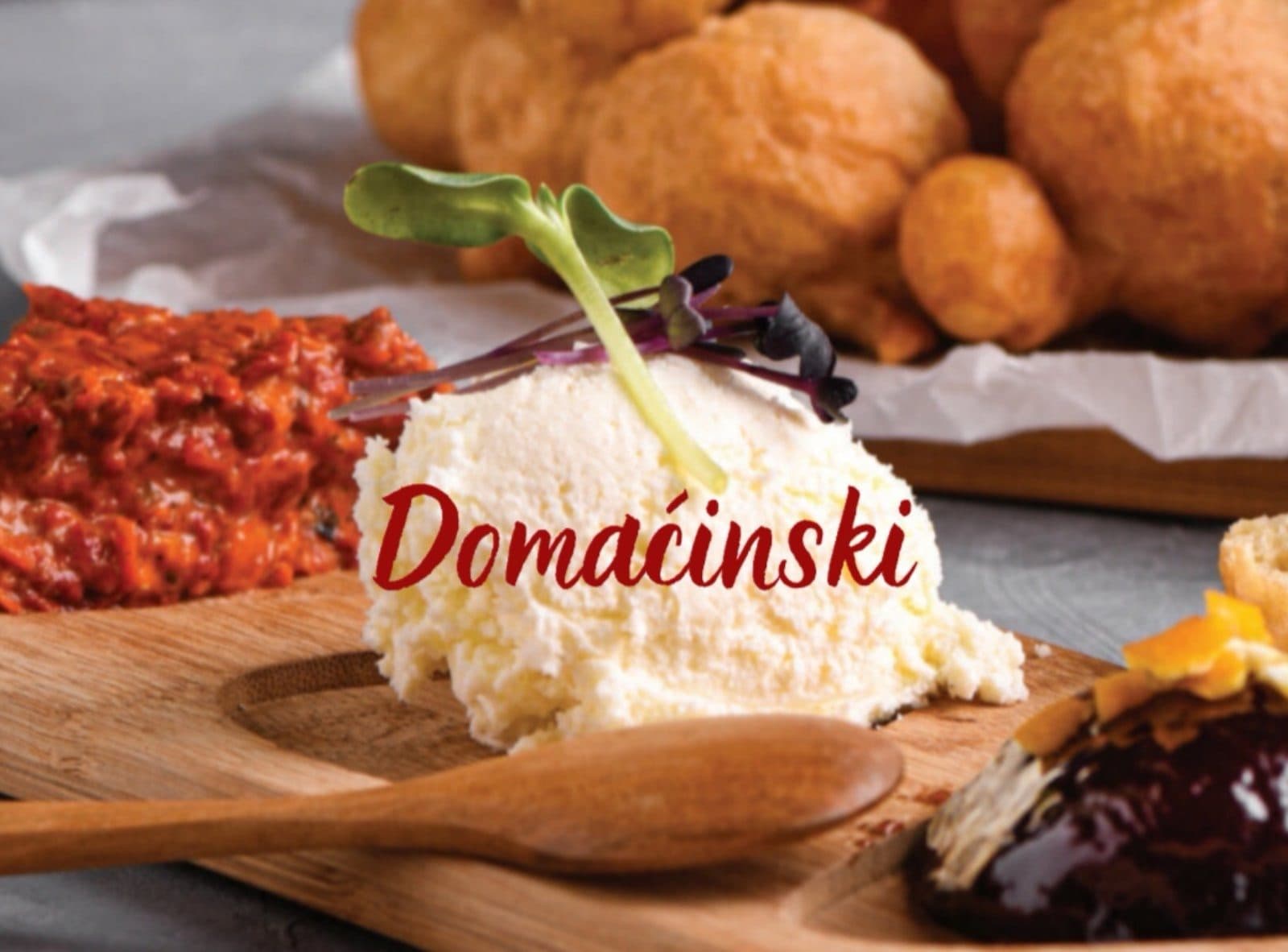
Act local, think global
In a hotel in Budapest I saw something that impressed me both as a person and as a professional. It was a special corner in the breakfast hall, entirely dedicated to local flavors. All of us who have been in tourism for a long time know well how this works in practice, and there is no point in fooling ourselves. It is clear that local producers often cannot keep up with the pace of large hotel chains. Sometimes the issue is quantity, sometimes transport, or those strict papers and standards dictated by laws and corporations, and, hand on heart, price often drives the story too. It is hard to expect every item on the buffet to be local, because the operational logic of large systems simply demands something else. However, setting aside one corner, clearly marking it, and giving it importance is something else entirely. Just imagine that table with our beautiful, ripe cheeses , real honey, or cured meat that smells of tradition and the home hearth. When you offer a guest those small jars of homemade wild-berry jams or a box of carefully chosen teas from Herzegovinian or mountain herbs, you are telling them a story about yourself. With that move you clearly tell the guest, and the whole community, that you value the region where you work. That is what would, from the start, already on the first morning when a guest gets up and goes to breakfast, make the difference between a mere overnight stay and a true experience of the destination. Perhaps this could be a good homework assignment for our hoteliers as well. To turn the story and the wishes into a concrete concept.