
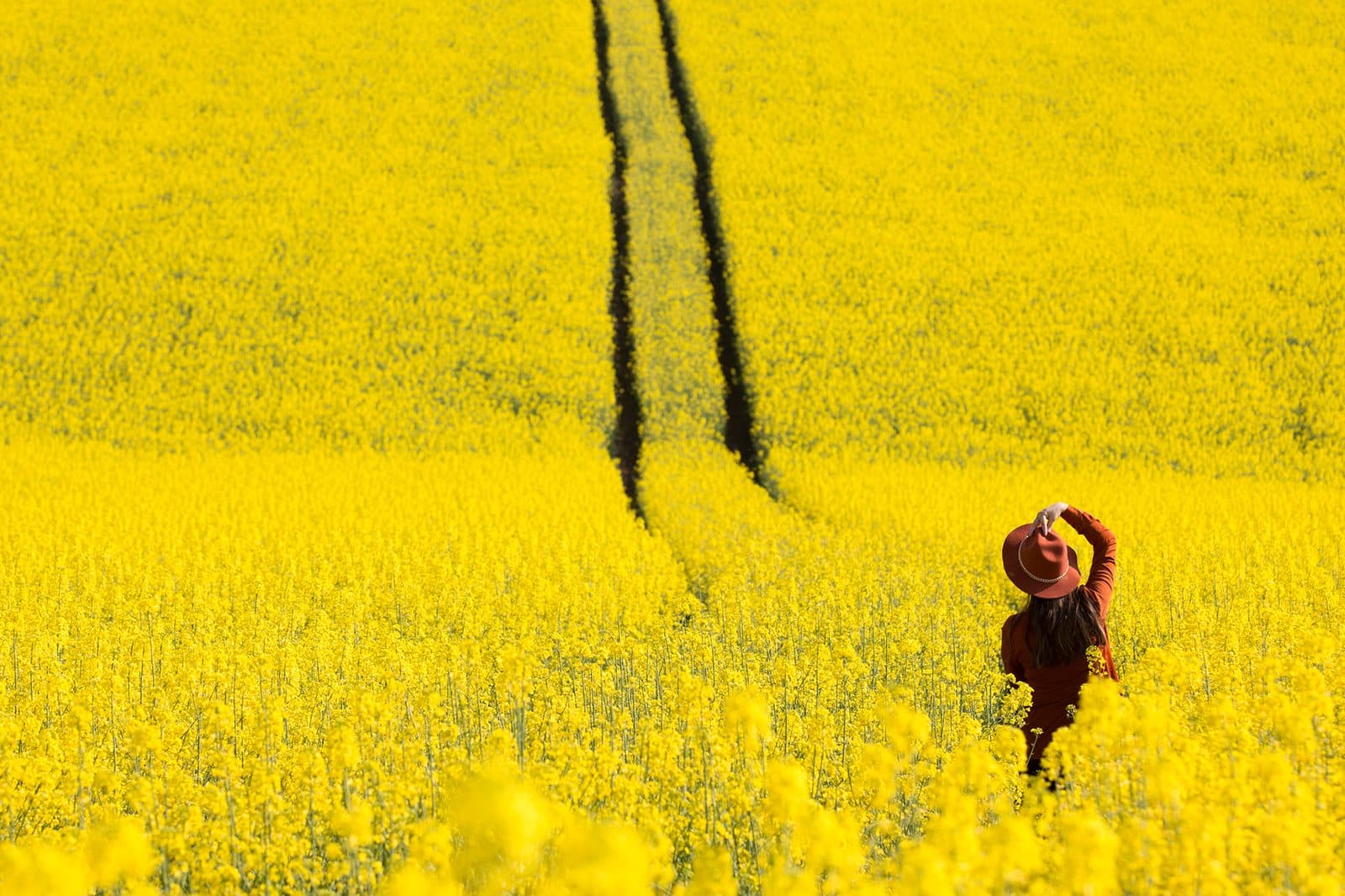
Spring is the season that brings new energy to people, to nature, and to the idea of travel. Days grow longer, the sun warmer, and the colors of meadows and trees more vivid. Everything around us comes into bloom, so it is no wonder that this is when we start thinking about day trips, walks, bikes, hiking trails, and short weekend getaways. After winter stillness, free time once again finds meaning in movement and time outdoors.
"Travel and change of place impart new vigor to the mind".
Seneca
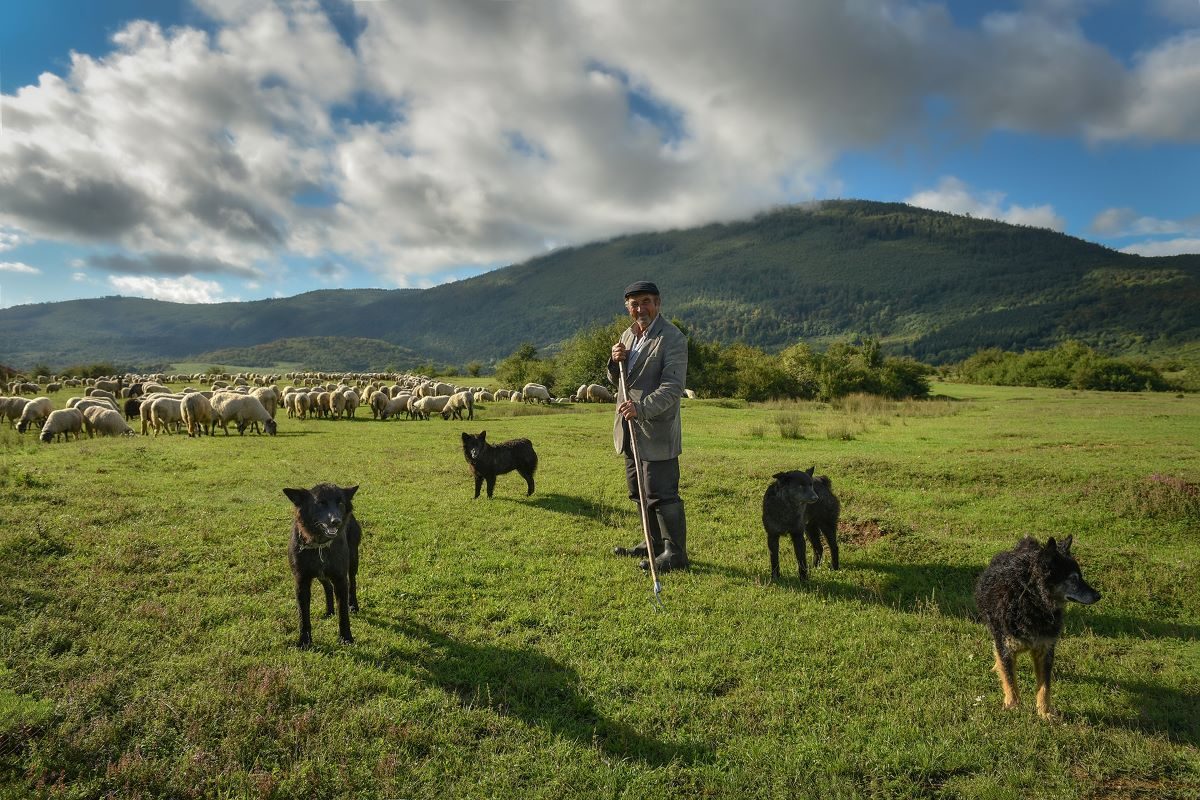
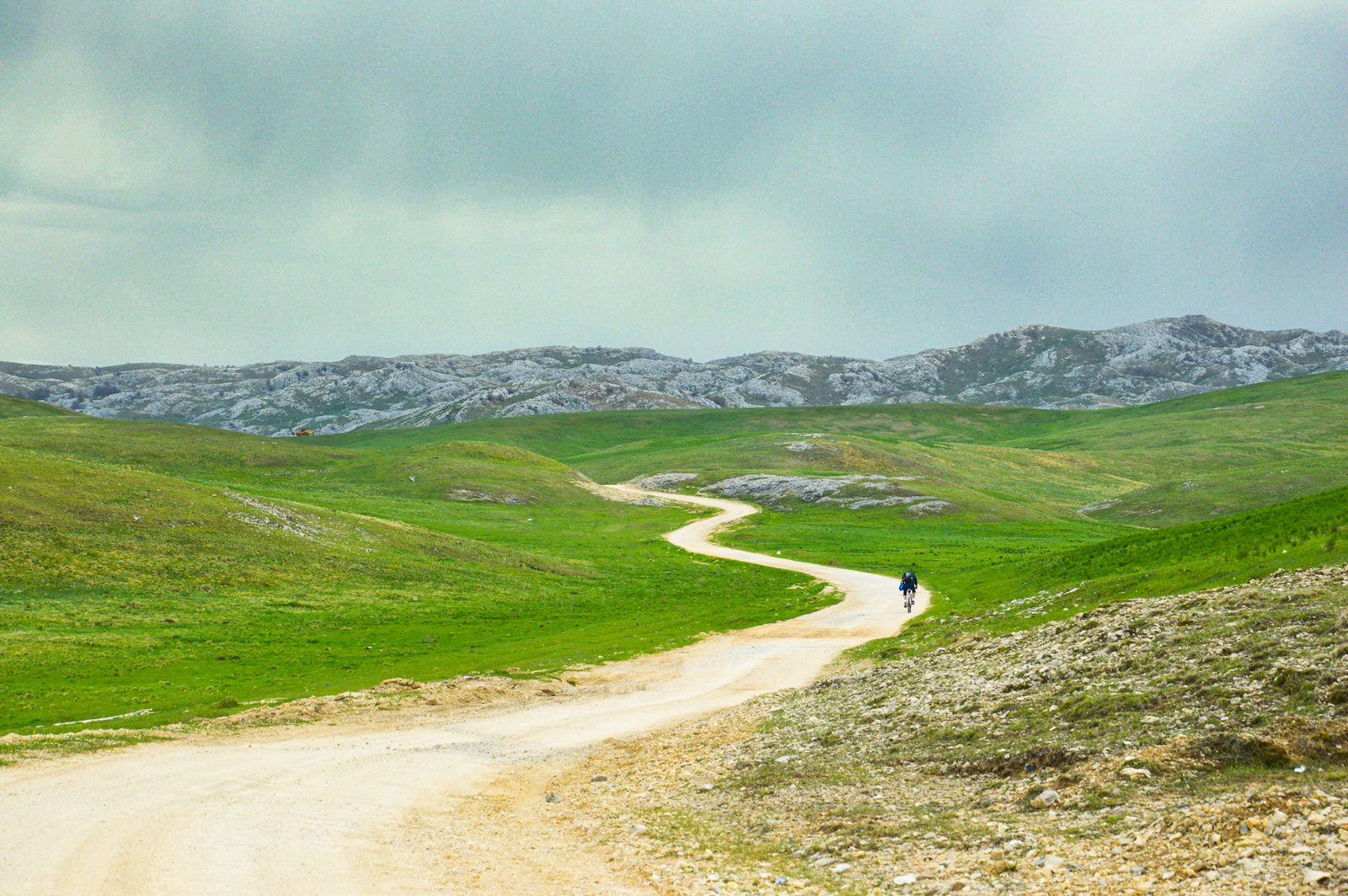
In this period, domestic tourism begins to bloom along with the vegetation. Ski resorts slowly grow quiet, but hiking, cycling, and walking trails wake up instead, along with river and lake shores, springs, and nature parks, all the way from Orjen to the Una. Camps and picnic sites across the country become centers of activity and enjoyment of nature, announcing the season that follows.
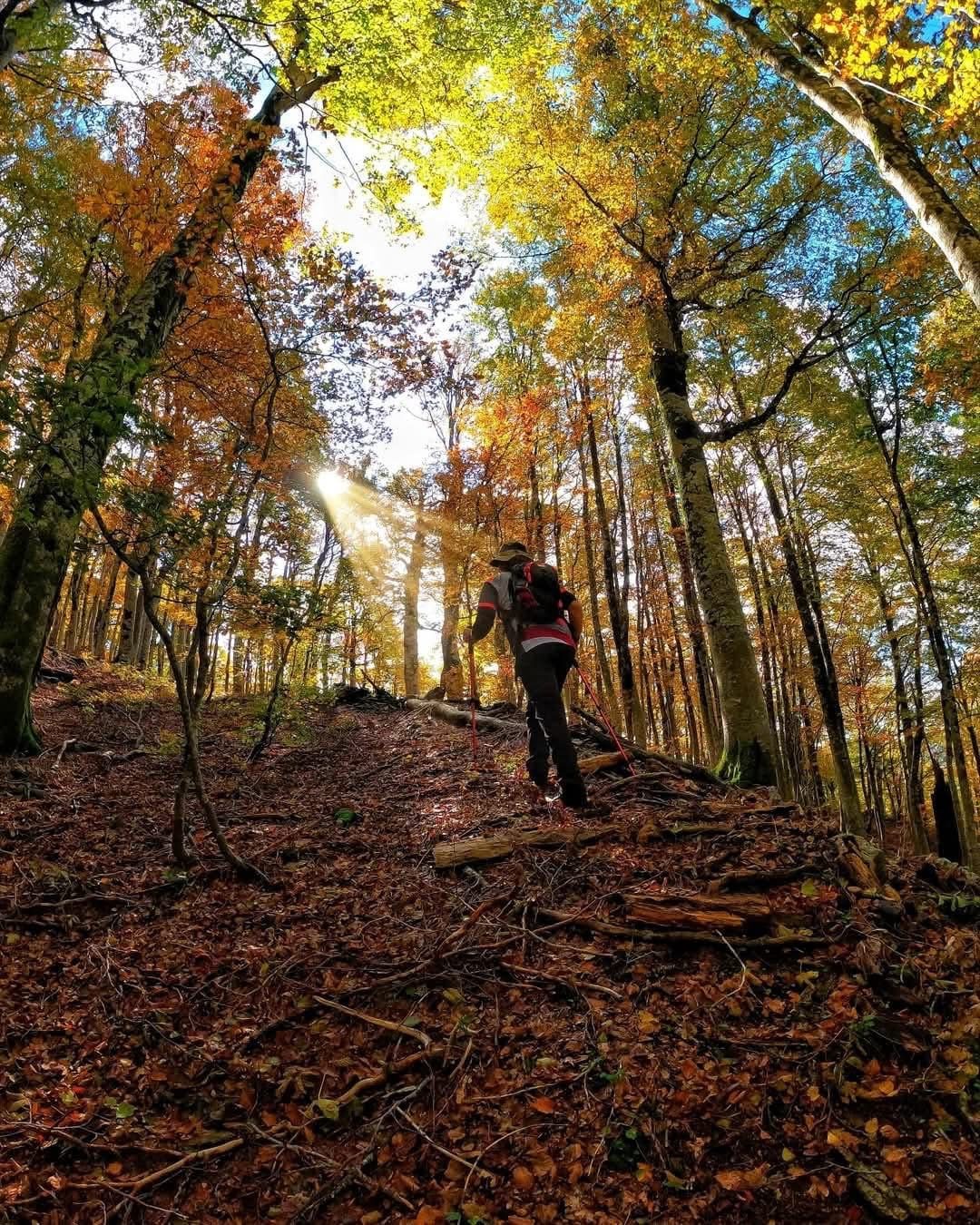
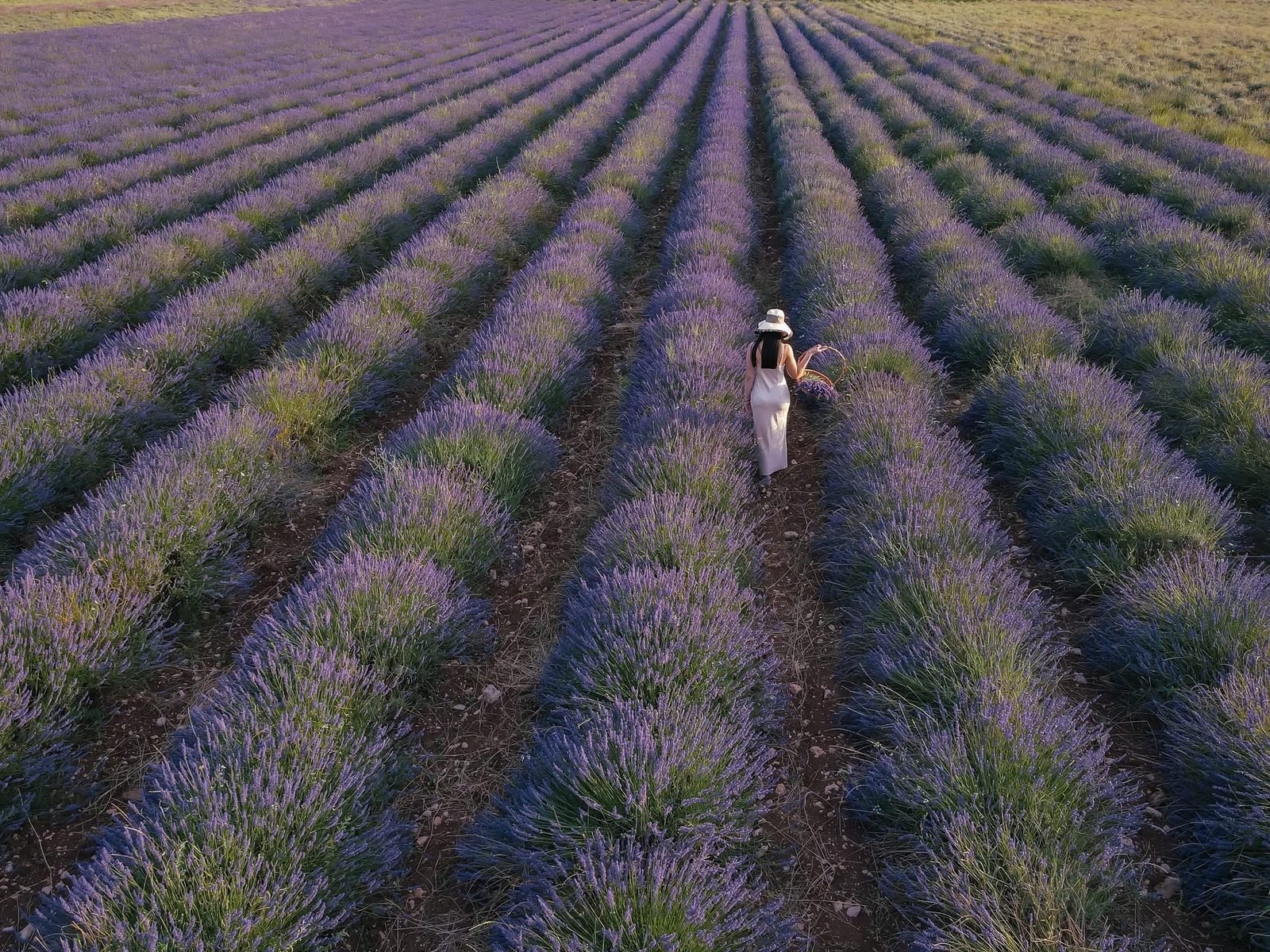
What makes domestic tourism special is its authenticity. Domestic travelers have nothing to wait for from the "main season"; on the contrary, they are the first heralds of tourism, just as snowdrops are the heralds of spring.
It is precisely these events and activities in our rural areas, lakes, and mountains that lay the foundations for developing tourism products in smaller communities, even if progress is slow, even if we are not yet aware of that fact, or simply overlook how much wealth we have within reach.
Is it really far for someone from Trebinje to go to Lake Alagovac in Nevesinje? Or for people from Banja Luka to visit the springs of the Pliva? These mini adventures require nothing but willingness and a little time.
Still, with growing interest comes responsibility. If we love nature, let us show it through our actions. Let us leave destinations clean, and not leave plastic, paper, or cigarette butts behind. Let us build a habit of respect for the space that feeds and calms us. Whom are we really leaving trash for if not ourselves?
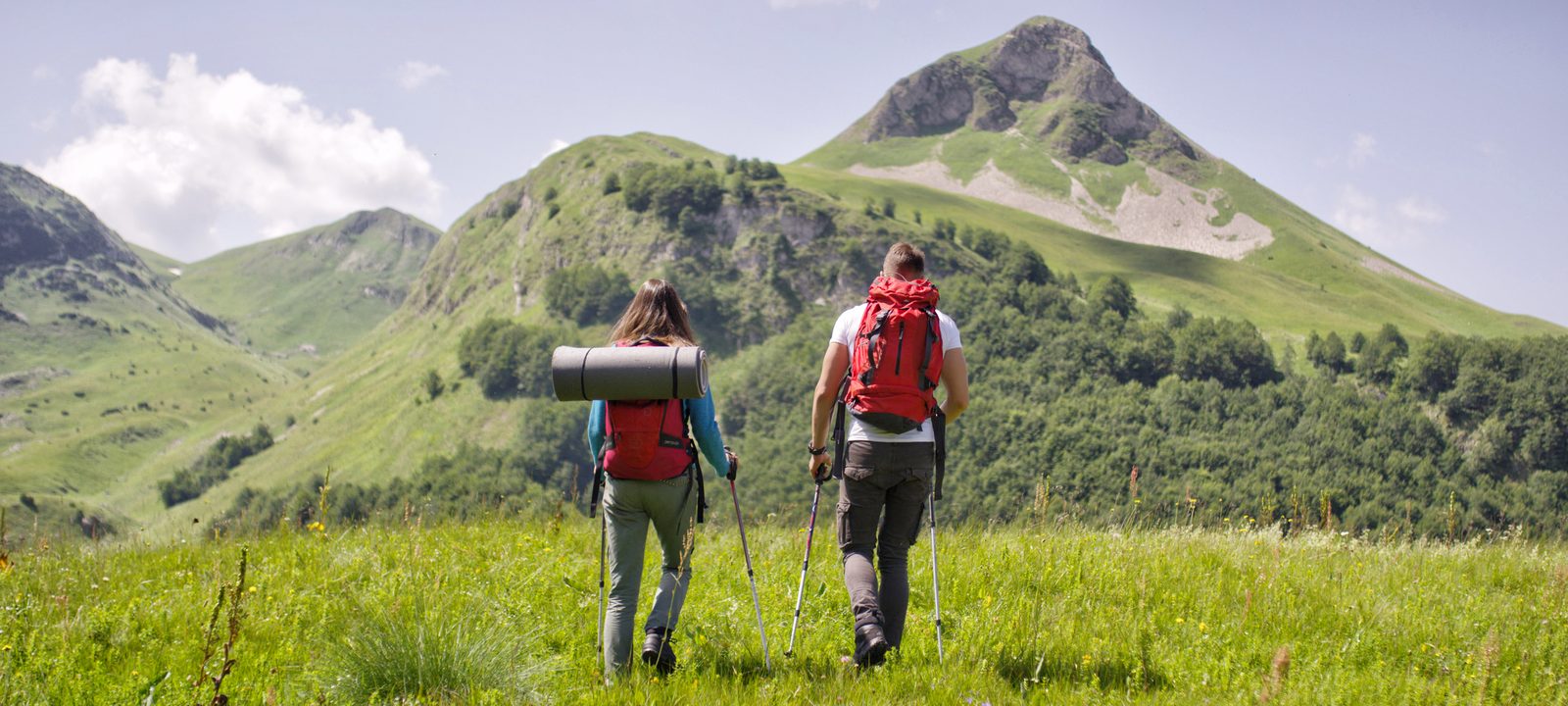
Every cigarette butt thrown from a car window, every bit of litter left after a picnic, and every unemptied container speaks to our relationship with the place where we live.
Why give anyone the chance to judge us by trash thrown beside the road? We can do better than that. A little more conscience and collective responsibility is enough.
It may sound ironic, but while the world changes rapidly and uncertainty grows, we are becoming one of the safer and more pleasant destinations. Where else can you reach a dense forest from the city center in an hour? Where can you scoop water from a spring with your hand and drink it, or nap on a bench without fear? Leave your personal belongings on the table while you drink coffee?
Yes, we may not have perfect public transport, a taxi driver may count in euros, but almost everywhere you will meet a sincere smile and a readiness to help you arrive on time and at the right moment to any attraction or location. It is precisely that warmth and sense of safety that for years has been one of the more important reasons and motives drawing guests and creating value greater than expected. Regardless of the narrative we have been fighting for 35 years now.
Perhaps it is time we start expecting more of ourselves, and that we value what we have, nurture nature, and proudly be tourists in our own country.
Similar posts
Sipovo on the water
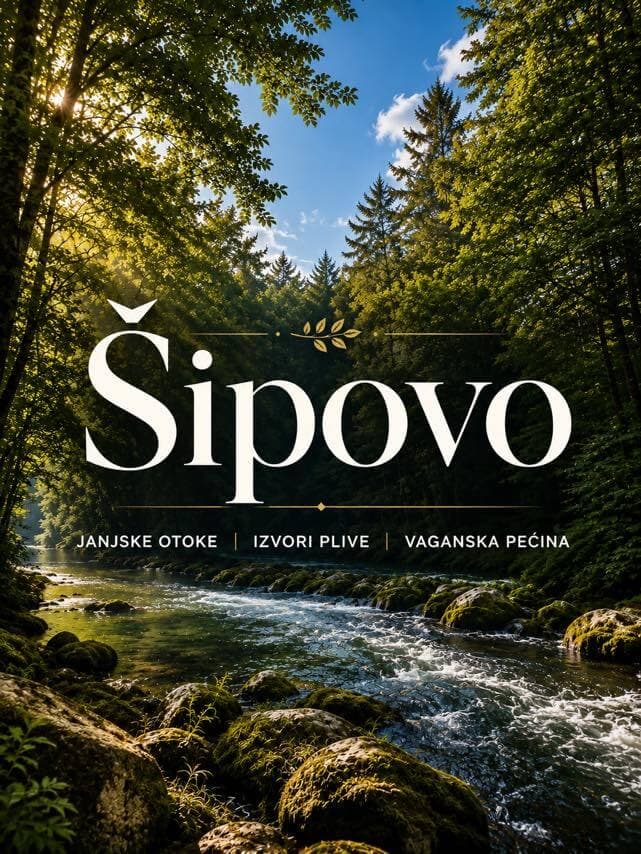
This is not my first time in Sipovo, but I have to admit that, unlike the last visit, the place feels much more touristy than before. At every turn there are apartments, bungalows, cottages, eco zones — of this kind and that, to be fair — but it is quite clear that a good part of the locals has started to take on the role of host. That is good for this place, because the situation with the attitude toward nature is critical, and I hope that a strong interest from locals and a significant flow of visitors will protect it — in the sense of seeing nature as a tourism resource from which the whole community can benefit, not only a few individuals. Source of the Pliva River Sipovo has, if one can put it this way, breathed out after corona. It has been discovered. We all discovered it a little, promoted it, saw something unique, important and potent to sell. Walking around, I feel a little important, because I know how many times and in how many places and occasions, recognising the potential, I promoted this place. There is still a great deal to do and to put in order. Some of the things I saw are not dear to me, but this text is not about that. Crowds on the islets At the Janj islets a crowd was waiting for me. Parking is paid, but so many cars parked in every possible way is itself enough to create unease. There is a bus as well, just arrived. As usual, I check in with Dragana first. I wanted to yesterday too, but that was impossible because of the crowds. The Janj islets at Dragana’s… colourful, sweet and packed like a pomegranate. Konoba kod Dragane Unlike some previous visits, it is noticeable that other locals have organised too, so you have a few more options nearby to sit down. It is not at some high level, let’s be clear, but decent in a village way. In the end you come for something like that. Fine, the bench for sitting could be repaired, because you are charging for sitting on it. But those are details. Waterfalls and “compensation” Earlier you could not really reach the waterfalls; now you can, along a nice gravel road. Again it is through private land, and passage is free, although a kind woman at the entrance, and a sign as well, suggest you buy something as compensation. The beer is cold. Prices are symbolic, but you know how the saying goes: grain by grain. My older boy even got a candy. The waterfalls are beautiful. One approach is easy; the other demands great caution because of the height and the terrain. And there too you can see locals selling, mostly refreshments at symbolic prices. Nearby there are houses that rent accommodation. The impression is that everyone is renting accommodation. Demand does its work. I conclude that many people walk, circulate, leave and arrive. Sunday, it seems, is a special day for a weekend visit to the Janj islets. I see that also by comparing it with the trip to the source of the Pliva, where we were the only ones. There were no crowds on the visit to Vagan Cave either, but there was circulation there too. They have done it up nicely. The approach is paved. The explored part of the cave that is allowed for visits and tours is not long, so you can finish relatively quickly. Vagan Cave is worth visiting. Perhaps some basic equipment should be provided, say protective helmets. The cow as an attraction Back to the islets. Cows are all around us. From their milk comes one of the most beautiful cheeses we have — Janjska pletenica. It is interesting how many people photograph them. The impression is that they are an attraction. Carried by that, I photograph them too. And I often talk about this in the media and in workshops: original, simple, everyday situations, under the pressure of great changes in the way of life and its speed, are changing. We have become estranged from what we were. The cow is an attraction. Raj na vodi A few hundred metres from the main parking there is a nicely and tastefully arranged cafe/restaurant, “Raj na vodi”. You can also approach by car. Lord, it is terribly Instagrammable. There are plenty of details that wake your interest. Every guest holds a phone, turns their head and just clicks. I am here for the first time. The trout was tasty. I keep thinking how almost the entire Janj islets are photogenic. A formidable extra motive for coming, in today’s world “on a click”. Time will tell whether Sipovo, with its springs, rivers, caves, old-growth forests and the Janj islets, will manage to make a quality, sustainable story. Whether it will make a recognisable and unobtrusive setting, grounded in natural phenomena and an authentic experience — because it definitely has all the preconditions for that — or whether over time it will go to the completely opposite extreme. The chances, at this moment, are even.
A small case study in authenticity
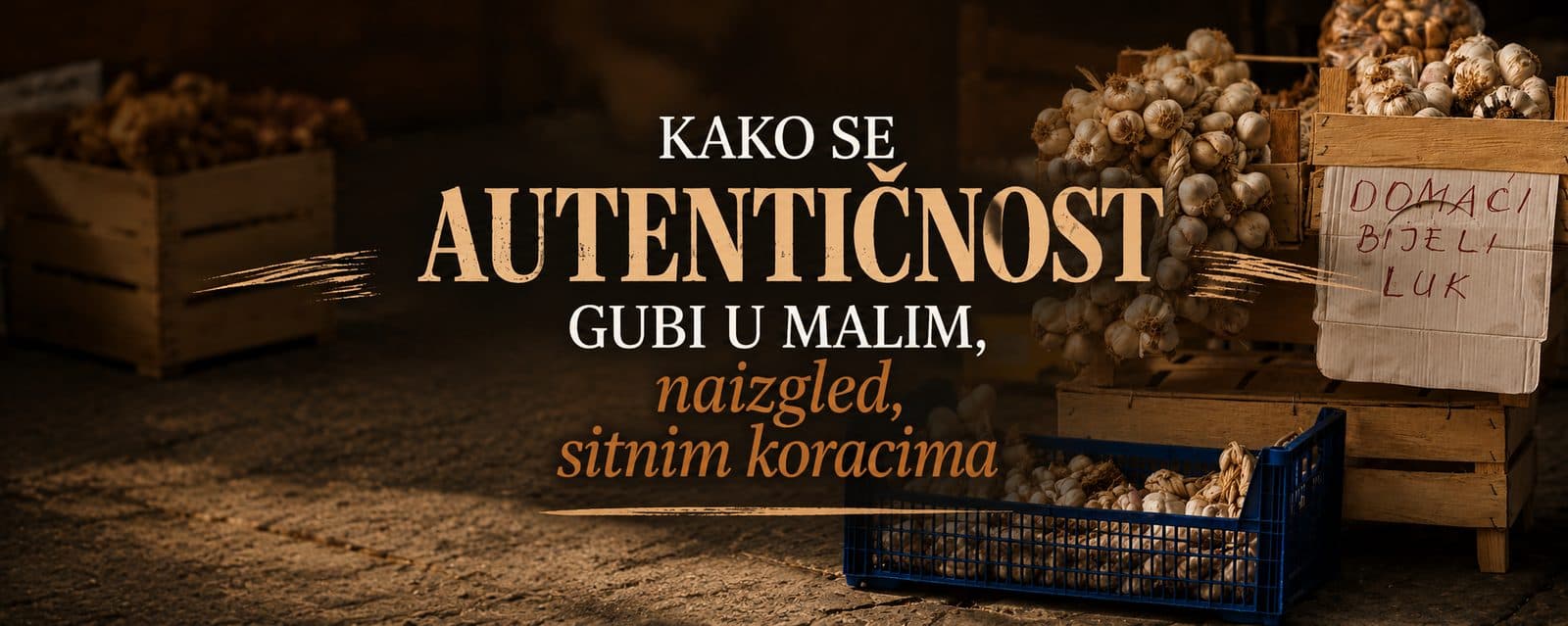
At the green market in Trebinje, a sign reads "white garlic" next to what has always been called saransak or cesan. The green market has long been a synonym for gathering, a place of local supply and demand, conversation and commentary. For a long time people have stopped by as if by duty and bought home-grown produce. From Trebinje, or from a little farther away, from the neighbors. Why white garlic, and not saransak? Probably so they would not have to explain it to the buyer, so they would not have to repeat the same story to the tenth customer, so they would not waste time on a word half the people do not know. You call it what the customer calls it. You sell faster. But every time we replace a local name with a universal one, we lose something that is hard to bring back later. Saransak carries place, language, and the generations that called it that. White garlic is the same product, of course, but without a local address. When you sell saransak, you have sold a local product with an authentic name. You have gained an experience and new knowledge. When you sell white garlic, you have sold, or bought, white garlic you can find at your own market too. Saransak has an address; white garlic does not. Tourism lives from that address. From what cannot be bought at another market, in another town, at least not under that name. And not with the same value. And when we erase the word, we erase part of that value too. I am not talking about nostalgia. I am talking about a resource that disappears just as quickly as any other when no one protects it or uses it.
The tourism product that never made it into the brochures
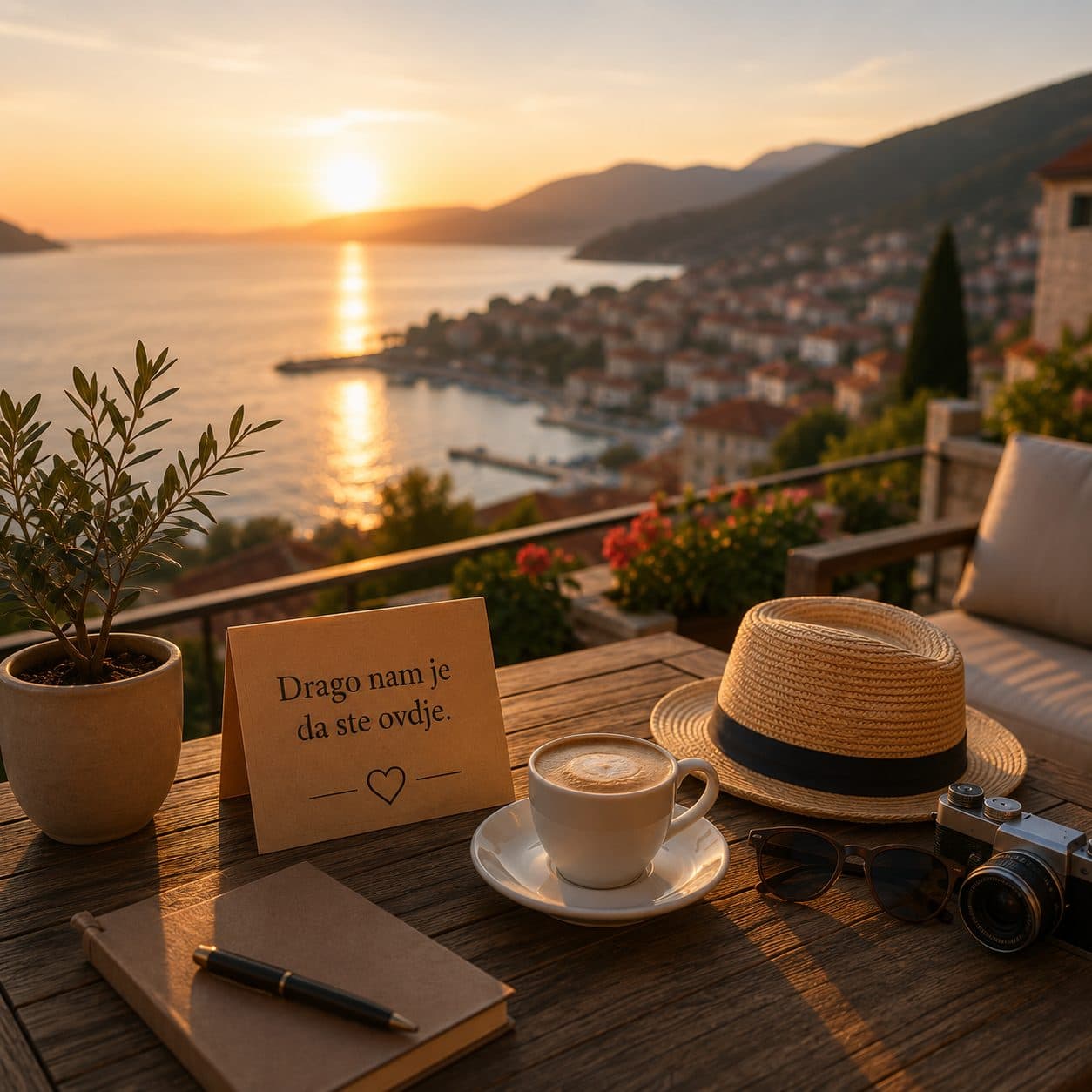
In tourism we often talk about investment, hotels, accommodation capacity, attractions, and statistics. We measure arrivals, overnight stays, and revenue. Yet none of that is what a guest carries home in the backpack of memories. Let us start with ourselves. What makes us happy when we travel? I am sure most people give similar answers. We want the journey to pass without stress. Without unnecessary complications. We want to feel welcome, safe, and at ease. That is precisely why the tourist experience begins long before arrival at the accommodation. It does not begin on the road, at the airport, or, especially relevant for us, at the border crossing either, even though queues at border crossings during the tourist season are among the most serious obstacles to competitive tourism development in the region. When a traveler spends hours in a line in the sun or shut inside a bus, it is hard to expect them to rate the experience as pleasant. Time meant for rest turns into a test of patience, and the first impression of the trip becomes frustration. The issue of tourist buses is especially sensitive, where the ride to the destination is often shorter than the wait at the border. Such experiences leave a mark and often cancel out much of the effort invested in promotion or in developing the tourism offer, not to mention the effort invested by the agency. And that is where the tourism of feeling begins, because a tourist does not divide their experience into sectors and jurisdictions. They do not care whether the queue is the fault of border police, road infrastructure, a travel agency, or someone else. They remember only how they felt in that moment. If we fly, we are happy when there are no excessive crowds, when check-in goes quickly, and when the flight is safe and comfortable. When we reach the accommodation, we want a kind host to greet us, a clean room, no noise, and everything looking as it was presented at the time of booking. We care about the receptionist's smile and a good coffee. We care that the taxi arrives on time and that we feel safe walking through the city. In one of my earlier texts I wrote that a destination should be viewed as your own home, and the tourist as a guest coming into your house. When friends or family visit, we do not show them the furniture. We try to make them feel comfortable, welcome, and relaxed. The same should apply to destinations. A tourist wants to feel the atmosphere of a place, meet people, try local food, walk the streets, and for a few days become part of everyday local life. A personalized approach to the guest is a tourism product The tourist experience begins long before the tourist arrives in person. We do not know when someone first caught themselves thinking, I am going there. When exactly we invited them, who invited them, and how many times we invited them before the decisive moment. That is why the invitation to tourists begins with the way our city streets are arranged, with the cleanliness of promenades, with flowers, with the safety we promise. It begins with how we dispose of waste, with our attitude toward nature. It begins with the culture of how we treat one another. With the service and the offer they have researched. When they arrive, a guest quickly senses whether they are welcome somewhere. They sense the waiter, the receptionist, the taxi driver, the shopkeeper, the guide, the grandmother at the market, the clerk at the exchange office, and the passerby they asked for directions. A destination's reputation is built precisely in those encounters. That is why I believe the future of tourism will not belong to destinations with the most attractions, but to those that best understand people. Those who learn to manage guests' feelings. Those who work on emotion. And that is exactly why a personalized approach to the guest should never be seen as an added value of the tourism product, because it is a tourism product in itself.